Quote list0
Your product list is empty!

Animal
Rat

Orofacial Stimulation Test - Fehrenbacher, Henry, Hargreaves method

Product Code:31300/31320/31340

Measures hypersensitivity to thermal (hot and cold) and/or mechanical stimulation of the orofacial area in rats (mouse adaptor available). For research into a wide range of pain conditions involving the trigeminal nerve.

High throughput with data recorded from up to 16 cages with ORO-Software. Real time data display. Non-invasive, respectful test. Comprehensive metrics and easy data transfer for more analysis.

No vibrissae area shaving needed, avoiding animal discomfort and experimental perturbation.

Model
Choose a model to get a quote...
An extended warranty can be added for most Ugo Basile products. You can find this information in the ordering information section of each product.
To learn more about the extended warranty, CLICK HERE

Background

  • One of the few methods available for orofacial preclinical research.
  • Orofacial pain is one of the most common neurological complaints.
  • The Orofacial Stimulation Test by Ugo Basile uniquely measures hypersensitivity to thermal or mechanical stimulation of the trigeminal nerve in rats and mice
  • Fehrenbacher, Henry, Hargreaves method, hence the credibility of highly cited scientists
  • Integrates higher-order brain (cognitive) functions into measurements of orofacial nociception

High throughput, simultaneous measurement

  • Rats voluntarily access a food reward or avoid the aversive stimulus.
  • Simultaneous measurement of nociceptive responses to thermal and/or mechanical stimulation.
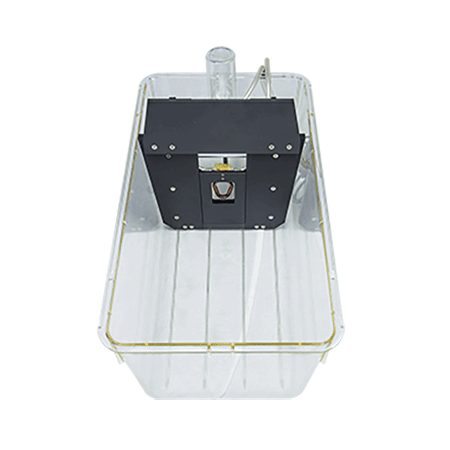
  • Non-invasive - does not require shaving. Stimulator contacted with animal vibrissae pad.
  • Metrics include duration of feeding and the number of feeding attempts measured by interruption of an infrared barrier as the animal attempts to obtain the reward.
  • Water temperature can be adjusted from ambient to 70ºC.
  • High throughput - data from up to 16 cages can be recorded simultaneously and displayed in real time using ORO-Software.
  • Data can be displayed in numeric and graphic format.
  • Data are automatically analysed across time according to an adjustable time window, independently viewable for each of the 16 cages. 
  • Test results can be saved in spreadsheet format for easy transfer to other programs for more analysis.
  • Adaptors for Mice are available. 
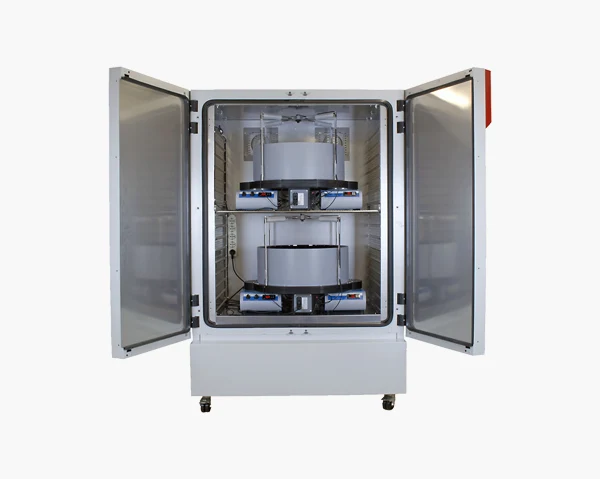
  • Device fits in standard home cages for easy training and testing


Mechanical and Thermal nociception assays within the same experiment

Integrates higher-order brain functions into measurements of orofacial nociception

Intact vibrissal pad, as the test does not require any vibrissal shaving

High throughput: up to 16 animals can be tested simultaneously

General
Water Temperature Can be adjusted from ambient to 70°C
Mechanical Stimulation 3 mechanical Stimulators with different wire number, and 1 blank
Oro Software Collects and records beam-break number and duration from up to 16 cages simultaneously
Operating Temperature

10°C to 40°C; 5% to 95% RH (non-condensing)

Sound Level Negligible
Pollution Degree ≤ 2 


Physical 

Product Code Net Weight Shipping Weight
31300 Net Weight

13Kg

15Kg
31320 Net Weight 23Kg 28Kg
31340 Net Weight 38Kg 43Kg


Warranty

Warranty Orofacial System is covered by a 12-month warranty + 12 after product registration
UB-Care Additional UB-Care can be added for other 12 or 24 months

Orofacial pain problems are common and involve structures and mechanisms unique to the trigeminal nerve. Few methods are currently available for orofacial preclinical research, and none incorporates parallel measurement of mechanical or thermal stimulation within the same experiment.

Moreover, while most of the current assays measure unlearned behaviors, such as flinching or withdrawal reflexes, the new Orofacial Stimulation Test, developed by Fehrenbacher, Henry and Hargreaves, integrates higherorder brain functions into measurements of orofacial nociception.

This innovative approach permits highly integrated nociceptive responses to thermal or mechanical stimulation.

Animals are trained & tested in standard home cages. Tests are performed in the presence of thermal or mechanical stimuli contacting the vibrissal pad. Following treatment to induce hypersensitivity, (e.g., trigeminal ligation or injection) trials are repeated to determine the effect of treatment on feeding behavior/reward. Assay sensitivity (inflammation-induced decreases in feeding behavior and reversal of hypersensitivity by local and systemic administration of analgesics) has been proven (Hargreaves et alia, ms in prep.); the feeding behavior is strongly correlated to mechanical or thermal orofacial nociception, as the animal must contact the stimulator in order to access the food reward.

Orofacial pain problems are common and involve structures and mechanisms unique to the trigeminal nerve. 

Few methods are currently available for orofacial preclinical research and none incorporates parallel measurement of mechanical or thermal stimulation within the same experiment.

Moreover, while most of the current assays measure unlearned behaviors, such as flinching or withdrawal reflexes, the Orofacial Stimulation Test, developed by Dr. Fehrenbacher, Henry and Hargreaves, integrates higher order brain functions into measurements of orofacial nociception.

31300 Orofacial Orofacial Stimulation Test, Complete System for one anima
31300-001 Electronic unit (four channels)

31300-002

Additional cage assembly (includes thermal and mechanical stimulators and feeding detector)
31300-003
Heating/Circulating Bath for Thermal Orofacial Stimulation Test, complete with dedicated connections for Orofacial systems
Temperature range is from ambient up to 150°C
31300-103 Heating/Cooling and Circulating Bath for Thermal Orofacial Stimulation Test, complete with dedicated connections for Orofacial systems
Temperature range is from -20 up to 150°C
31300-010 ORO-Software, for data acquisition and analysis from up to 16 cages
E-AU 101 USB Memory Stick, including Instruction Manual


31320 Orofacial Stimulation Test, Complete System for two animals

31300-001 Electronic unit (four channels)

31300-002

Additional cage assembly (includes thermal and mechanical stimulators and feeding detector)
31300-003
Heating/Circulating Bath for Thermal Orofacial Stimulation Test, complete with dedicated connections for Orofacial systems
Temperature range is from ambient up to 150°C
31300-103 Heating/Cooling and Circulating Bath for Thermal Orofacial Stimulation Test, complete with dedicated connections for Orofacial systems
Temperature range is from -20 up to 150°C
31300-010 ORO-Software, for data acquisition and analysis from up to 16 cages
31300-320 Water Distributor (for 2 and 4-cage systems only)
E-AU 101 USB Memory Stick, including Instruction Manual


31340 Orofacial Stimulation Test, Complete System for four animals

31300-001 Electronic unit (four channels)

31300-002

Additional cage assembly (includes thermal and mechanical stimulators and feeding detector)
31300-003
Heating/Circulating Bath for Thermal Orofacial Stimulation Test, complete with dedicated connections for Orofacial systems
Temperature range is from ambient up to 150°C
31300-103 Heating/Cooling and Circulating Bath for Thermal Orofacial Stimulation Test, complete with dedicated connections for Orofacial systems
Temperature range is from -20 up to 150°C
31300-010 ORO-Software, for data acquisition and analysis from up to 16 cages
31300-320 Water Distributor (for 2 and 4-cage systems only)
E-AU 101 USB Memory Stick, including Instruction Manual


Optional

31300-323 Kit of Mouse adaptors for thermal and mechanical stimulation (for 1 cage)

N. Benedicter, K. Messlinger, B. Vogler, K. D. Mackenzie, J. Stratton, N. Friedrich, M. Dux, 2023, "Semi-Automated Recording of Facial Sensitivity in Rat Demonstrates Antinociceptive Effects of the Anti-CGRP Antibody Frema**zu*ab", Neurology International


J.C. Fehrenbacher, M. Henry, K. Hargreaves, 2010 “Characterization of a novel orofacial behavioral assay to assess hyperalgesia to thermal and mechanical stimulation”, submitted


Back to: Pain and Inflammation

Research insights

Preclinical research in pain and inflammation

Pain affects an estimated 20% of adults worldwide, with millions of new chronic pain cases diagnosed every year. Yet, it remains insufficiently addressed as a major public health issue. Recognizing pain as a complex condition influenced by biological, social and environmental factors is essential to improve research, prevention, treatment and health policies.

Developing safer and more effective pain management strategies requires a deeper understanding of the biological mechanisms underlying pain and inflammation. In this context, preclinical research plays a fundamental role in identifying therapeutic targets, evaluating novel treatments and generating evidence to support translation into clinical practice.

Most used paradigms for pain and inflammation research

Pain and inflammation research uses a combination of evoked and spontaneous paradigms to assess nociception, hypersensitivity, inflammatory responses and pain-related impairment in rodents. Evoked thermal paradigms include plantar stimulation, tail flick, hot/cold plate testing, thermal place preference and thermal gradient assessment, which are used to investigate heat sensitivity, cold sensitivity, thermal hyperalgesia, allodinya and thermal preference or avoidance.

Mechanical paradigms include dynamic plantar stimulation, electronic or manual Von Frey testing, paw pressure testing and direct joint pressure application, supporting the assessment of mechanical allodynia, hyperalgesia and joint hypersensitivity. Spontaneous pain paradigms include weight-bearing asymmetry, postural imbalance, vertical activity and gait or locomotor changes, which are particularly relevant in arthritis, neuropathic pain, bone cancer pain, post-surgical pain and inflammatory models.

Inflammation can also be evaluated as a dedicated endpoint through paw volume and oedema measurement, allowing researchers to quantify experimentally induced swelling and pharmacological treatment effects.

Specific pain conditions like the ones involving the Trigeminal nerve are assessed by dedicated devices for thermal and mechanical stimulation of the animal vibrissae area, during the Orofacial Test.

Key behavioral readouts in pain assessment

Pain and inflammation studies rely on behavioural readouts that quantify nociceptive thresholds, hypersensitivity, inflammatory responses and spontaneous pain-related behaviour. Key measured parameters include paw withdrawal latency after thermal stimulation, tail flick latency, vocalization, jumping, mechanical withdrawal threshold, force threshold, paw volume, oedema, hind paw weight distribution, thermal preference or avoidance, time spent in specific temperature zones, postural asymmetry and pain-related changes in locomotion or vertical activity.

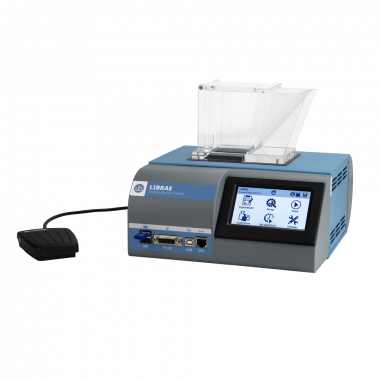
These readouts help researchers assess hyperalgesia, allodynia, inflammatory pain, joint pain, neuropathic pain, post-surgical pain and treatment effects across different rodent models. By combining evoked responses with spontaneous behavioural endpoints, preclinical pain research can capture both stimulus-induced sensitivity and more naturalistic pain-related impairment. Ugo Basile’s pain portfolio includes instruments for thermal, mechanical, inflammatory and spontaneous pain assessment, including Plantar Test, Dynamic Plantar Aesthesiometer, Hot/Cold Plate, Electronic Von Frey, Plethysmometer, Librae Incapacitance Tester and Climbing Test.

Ugo Basile instruments for pain and inflammation research

Since 1963, Ugo Basile has supported pain and inflammation research with instruments designed to measure nociceptive thresholds, hypersensitivity, inflammatory responses and spontaneous pain-related behaviour in rodents.

Ugo Basile offers a complete portfolio of instruments for preclinical pain and inflammation research, covering thermal, mechanical, inflammatory and spontaneous pain-related endpoints.

Ugo Basile devices for thermal stimulation

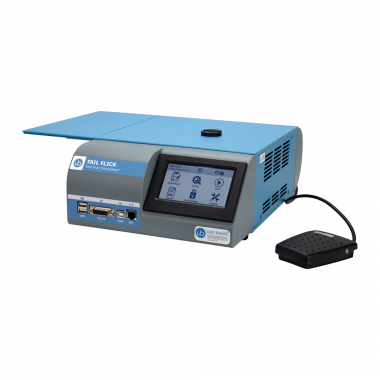
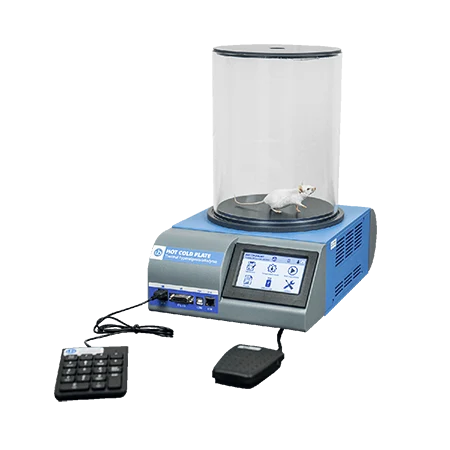
The Plantar Test is used for thermal hyperalgesia studies through radiant heat stimulation of the hind paw and automatic paw-withdrawal detection. It is the gold standard for Thermal Hyperalgesia tests in unrestrained animals. The Tail Flick measures nociceptive thresholds to infrared heat stimulation of the tail and is especially suited to rapid, reflex-based analgesic screening with possibility to run repeated tests thanks to the lack of learning being the tail flick a reflexive response. The Hot/Cold Plate supports hot and cold sensitivity studies, including constant temperature, ramping and complex temperature protocols, while the Thermal Place Preference and Thermal Gradient Ring allow researchers to evaluate thermal preference and avoidance in freely moving animals. Both systems involve a cognitive component and in fact repeated tests on the same animal are subject to hyper- or hypo- responses due to previous test experience.

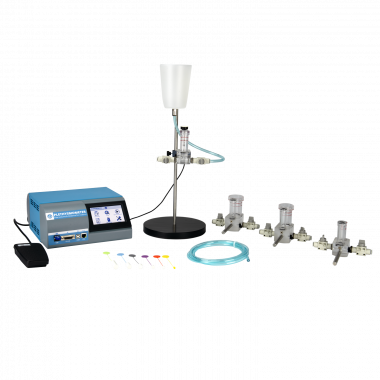
Orofacial Stimulation measures hypersensitivity to thermal (hot and cold) and/or mechanical stimulation of the orofacial area in rats (mouse adaptor available) and is used for research into a wide range of pain conditions involving the trigeminal nerve with no need to cut vibrissae.

Ugo Basile devices for evoked mechanical stimulation

For mechanical sensitivity, the Dynamic Plantar Aesthesiometer provides automated force application and paw-withdrawal scoring for mechanical allodynia studies, while the Electronic Von Frey and Von Frey Filaments support mechanical threshold assessment across different force ranges. The PAM – Pressure Application Measurement system is designed for joint pain and arthritis models, enabling direct quantifiable stimulation of rodent joints. However the PAM can also be used with specific applicators for other parts of the body from the paws to the back and spinal chord, etc. Analgesy-Meter is typically used for inflammatory conditions to measure to measure mechanical sensitivity and pain threshold of pressure applied on mic or rat paw for basic or applied research or phenotyping.

Ugo Basile spontaneous pain apparatus

The Climbing Test adds a vertical activity endpoint for spontaneous pain, motor function and activity-related studies. Librae Incapacitance Tester assesses hind paw weight distribution as an objective measure of spontaneous pain. Plethysmometer measures paw volume and oedema.

Frequently Asked Questions

What instruments are used to measure pain in rodents?

Rodent pain can be assessed using different instruments depending on the type of pain response being studied. Thermal pain is commonly measured with plantar stimulation systems, tail flick meters, hot/cold plates, thermal place preference systems and thermal gradient paradigms. Mechanical sensitivity is assessed with dynamic plantar aesthesiometers, electronic Von Frey devices, manual Von Frey filaments, paw pressure systems and joint pressure tools. Spontaneous pain and inflammation can be evaluated through weight-bearing asymmetry, paw volume measurement, gait analysis and activity-based readouts.