Quote list0
Your product list is empty!


new
GA.I.T Analysis System

Product Code:48203

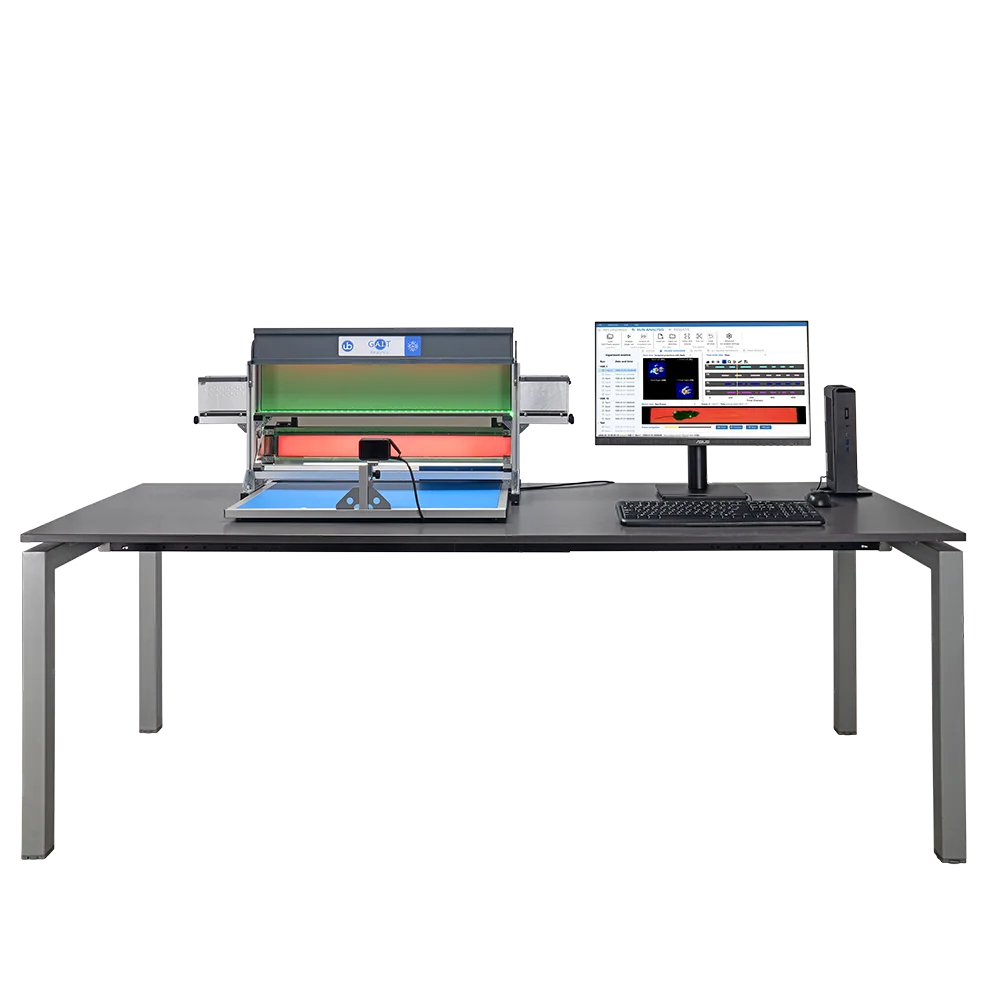
Gait Analysis by Ugo Basile Gait is a next-generation, fully automated table-top system designed to detect gait alterations in rodent models with unmatched ease of use and almost 100% accuracy in paw detection. Powered by proprietary AI algorithms, it identifies subtle motor, age-related, or pain-related changes that traditional tools might miss, or require extensive manual corrections

The biggest challenge today in automated gait analysis is the correct identification of each paw to calculate all parameters automatically without the need for the scientist to manually check if the software has correctly identified the paws.

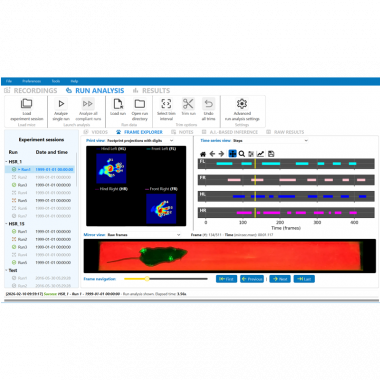
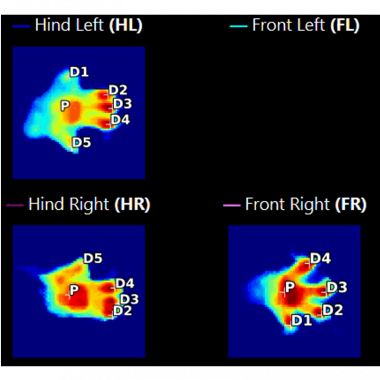
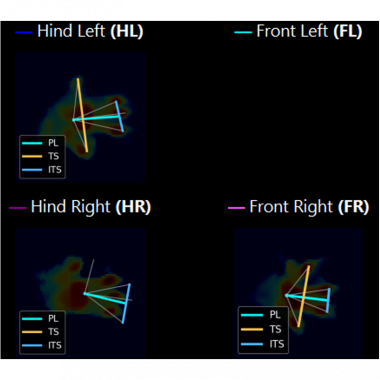
Since the Ugo Basile method is not based on classic video-tracking contrast, but on supervised A.I., paw identification is virtually mistake-free. The software automatically manages belly-touching, or other type of artifacts and offers single finger resolution, distinguishing palm centroid and digits even in complex prints.

Numerical analysis of the displayed data is automatically saved and available as a CSV file that can be open in MS Excel.

An extended warranty can be added for most Ugo Basile products. You can find this information in the ordering information section of each product.
To learn more about the extended warranty, CLICK HERE

Background


Locomotion is a complex behavior involving the integration of musculoskeletal, neurological and sensory systems to produce coordinated movement. Because of this, gait is a sensitive marker of pain and motor dysfunction, widely used in motor coordination and motor function models, in neurodegenerative models and injury in general, arthritis, pain and aging (Clark et al., 2019; Sayed-Zahid et al., 2019).


Early approaches to rodent gait analysis, such as inked footprints on paper, provide only coarse information on stride length and paw placement. No temporal parameter (e.g. duty cycle) is available with non-automated systems. While still used for basic screening, these manual methods lack the resolution and objectivity required to detect subtle or early motor deficits. Rodents, as quadrupeds and prey animals, often mask signs of pain or impairment (Mogil, 2015). Their ability to shift weight between limbs (e.g., compensating for hindlimb injury by loading the forelimbs) can further obscure deficits detectable in bipedal species (Saunders et al., 2017).


To overcome these challenges, automated gait analysis systems have become essential in neuroscience, pharmacology and toxicology. These tools offer high-resolution, multi-parameter assessments, such as stance duration, stride variability, and interlimb coordination, captured in a naturalistic, unforced walking environment.


Gait Analysis by Ugo Basile combines A.I. accuracy and plug & play simplicity. Ready to run, right out of the box with pre-installed AI PC.


Traditional Gait Analysis system available in the market still show important limitations when it comes to analysis runs outcomes. The innovative Gait Analysis by Ugo Basile is a fully automated table-top system designed to detect gait alterations in rodent models with unmatched ease and accuracy, guaranteeing exact identification of paws, paw digits and other relevant body parts (e.g. head, animal centroid, tail).


The system is powered by proprietary A.I. algorithms that identify even the most subtle gait changes that traditional tools might miss or misidentify. The end result is a huge time-saving and accuracy because no manual paw identification or correction through frame-by-frame manual revision is needed.


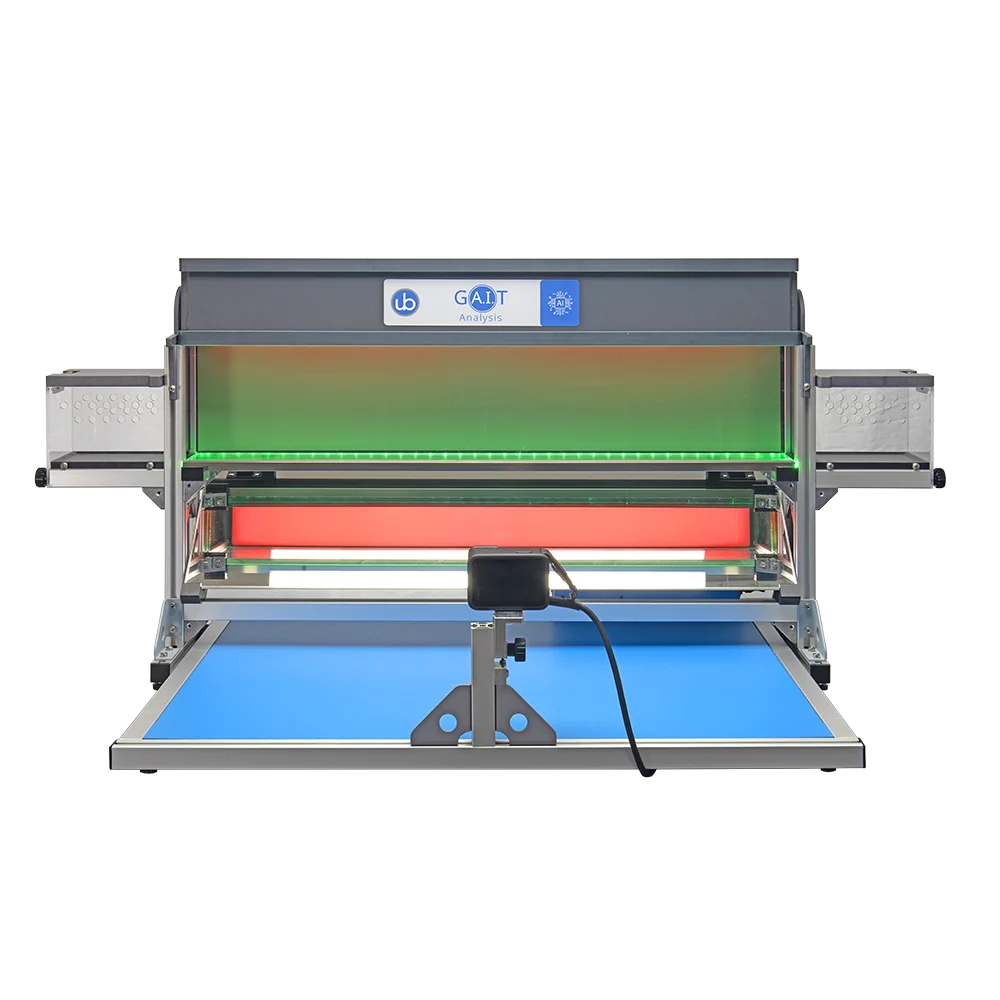
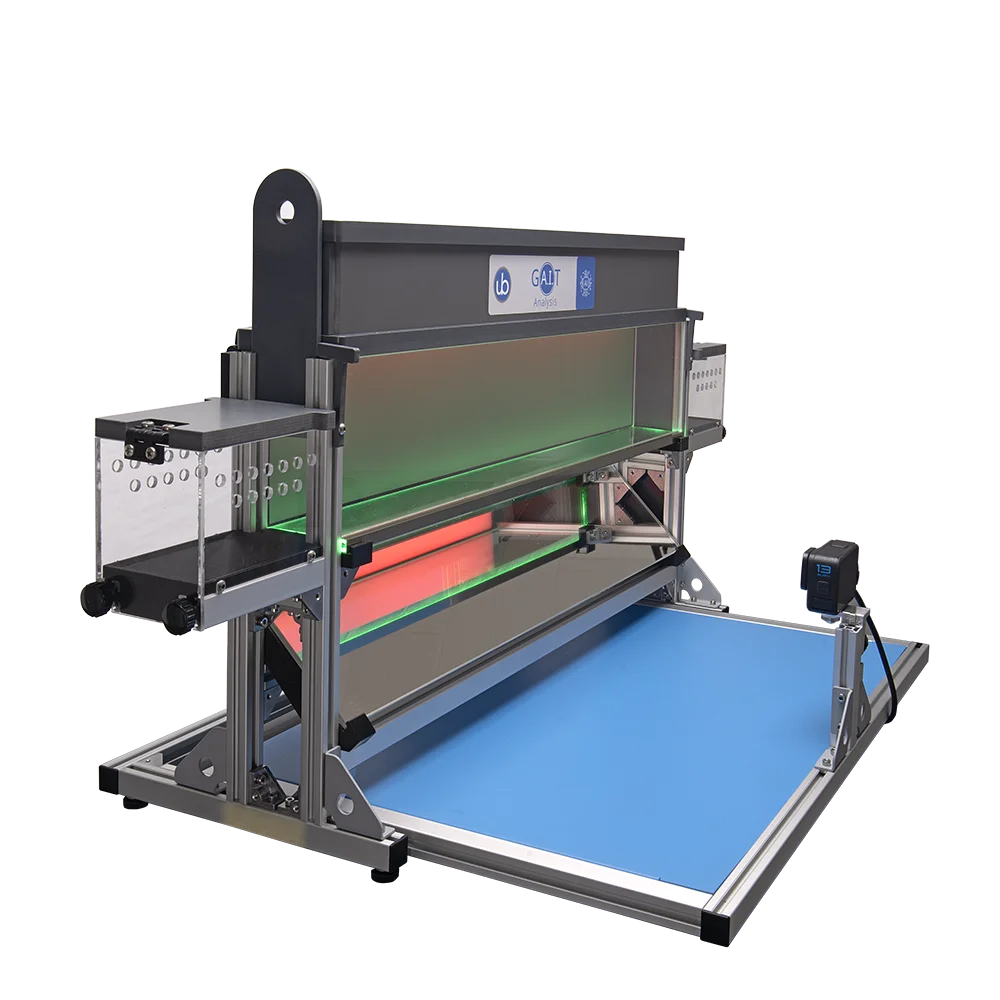
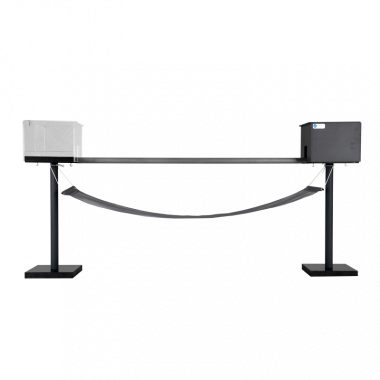
The mouse is moving freely starting from a transparent box to another one to favour back and forth runs, also thanks to the length and width of the corridor designed for mice, differently than other systems designed for rats also.


Once the desired number of comparable runs (i.e. similar speed) has been reached the software will automatically calculate the desired parameters and prompt the next animal.


The corridor floor is made of high-quality glass resistant to scratches and easy to clean. Green LEDs on the side of the corridor provide the frustrated total internal reflection (fTIR) effect, which enhances shapes, contact surfaces and pressure, plus all the other temporal and spatial parameters scientists are interested investigating.


The footprints appear bright green regardless of the mouse fur color (Hamers et al. 2001) and give complete flexibility, enabling step dynamics and semi-quantitative assessment of paw pressure (key in Pain Research and not only).


Two sliding cages are placed on each side of the corridor, each with its own door. They can be easily attached or removed, allowing smooth, stress-free animal handling.


A high frame rate camera is controlled by the software, which handles also background removal (e.g. feces or other artifacts) and detects valid runs automatically in real-time.


The results are saved in Excel format directly on the PC.


UB Gait Analysis is a complete plug-and-play package, including:

  • Compact table-top gait device
  • Transparent corridor with aluminum frame
  • High frame rate camera
  • Mirror module
  • Dual lighting system (green LED + red light)
  • Pre-configured AI PC with dedicated AI software
  • Initial training session for lab personnel by Ugo Basile PhD experts
  • On-request additional software training for very complex animal models


Its compact design and ease of use make it suitable for any lab bench, even in space-constrained environments.


Features

Benefits

Precise paw and body part identification via AI-trained software

Greater accuracy and higher inference speed compared to methods based on contrast. Time saving procedures thanks to tailored AI training. No manual revision needed.

Very high spatial resolution

Allows discrimination of single fingers and related parameters

Compact table top system

Fits any lab bench. Saves space in your laboratory.

Affordable price Accessible even to laboratories with limited budgets.
Complete package (PC + device + camera + preconfigured software + training) Seamless setup: users can immediately focus on the experiment without worrying about hardware and software settings.
Automatic session mode for runs Automates experimental workflow: researcher sets number of runs, the system selects only the valid ones. Researcher only needs to place the mouse in the corridor and the system handles the rest.

Automation of analysis output

Analysis and review are completed in a few minutes by eliminating the time-consuming efforts required by traditional paw manual review.

Integrated camera (GoPro Hero13 Black) Sharp, linear and synchronized images without fish-eye distortion.
Underlying mirror tilted at 45° Simultaneous acquisition of frontal and ventral images; additional parameters are available not only depending on paw placement.

Main Parameters Analyzed

MOTOR RESEARCH

PAIN & INFLAMMATION

AGING RESEARCH

Spatial and Temporal Parameters:

  • Stride Length
  • Stride Time (variability)
  • Swing/Stance Time
  • Paw Angle

Load and Support Parameters:

  • Duty Cycle
  • Paw Print Area
  • Paw Intensity/Pressure
  • Paw Spread

Stability and Coordination Parameters:

  • Stride Length
  • Stride Time variability
  • Base of Support
  • Regularity Index
  • Swing Time

Interlimb Coordination:

  • Regularity Index
  • Phase Relationship

Compensatory Parameters:

  • Base of Support (Step Width)
  • Weight shifting patterns
  • Body asymmetry index
  • Guarding posture

Postural Parameters:

  • Duty Cycle
  • Body stiffness index
  • Postural stability
  • Lateral body sway

Body Parameters:

  • Body axis deviation
  • Lateral body sway
  • Head-body alignment
  • Body rotation angle

Tail Parameters:

  • Tail position relative to body
  • Tail elevation angle
  • Tail rigidity

Tail Parameters:

  • Tail position relative to body
  • Tail movement amplitude

Tail Parameters:

  • Tail-body coordination
  • Tail movement amplitude


Physical

Footprint 69(w) x 56,5(d) cm (does not include PC and 24" monitor)
Total Dimensions 94(w) x 56,5(d) x 45(h) cm

Ventral View Corridor

66,5(w) x 5,5(d) cm 

Lateral View Glass Dimensions 66,5(w) x 12,5(d) cm 

Lateral Cages Internal Dimensions

12(w) x 8(d) x 12,5(h) cm

Weight 12 kg

Gait Analysis is a technique with an incredibly broad range of applications. The most common ones include Motor Neurodegenerative Diseases (such as Parkinson’s Disease [PD], Alzheimer’s, Huntington’s and Amyotrophic Lateral Sclerosis [ALS]) and Pain and Inflammation Research, in addition to complex longitudinal studies like the ones object of Aging Research. (Sashindranath et al., 2015; Zhao et al., 2021; Baldwin, 2016).


A common use case involves assessing disease progression or therapeutic response through changes in dynamic gait parameters, such as stride length, swing and stance phases, paw placement variability and interlimb coordination. For instance, shortened stride length and increased stance duration are frequently reported in PD, other motor disfunctions, arthritis models, while asymmetric paw pressure and other parameters are indicative of unilateral spinal cord or peripheral nerve injury (Hamers et al., 2006; Kappos et al., 2017).Gait analysis applied longitudinally enables detection of early-stage motor changes before symptoms emerge.


This is particularly valuable in aging models and in evaluating analgesic or neuroprotective drug efficacy.


Additionally, Ugo Basile system is unique as it simultaneously images ventral and lateral views, which allow for a full range of parameters to be directly measured and not just derived or calculated as in ventral-only system (i.e. all other systems in the market).

Gait Analysis (What's in the box)

48203

Gait Analysis system for mice. Based on AI, includes PC and GoPro Camera.

Back to: Pain and Inflammation