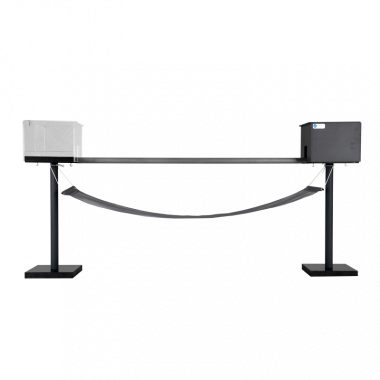
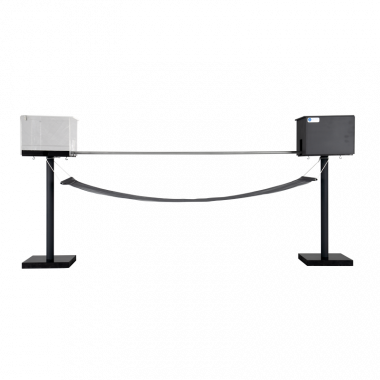
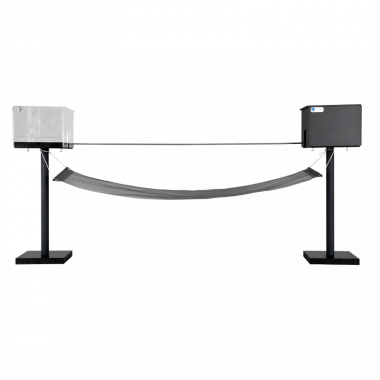
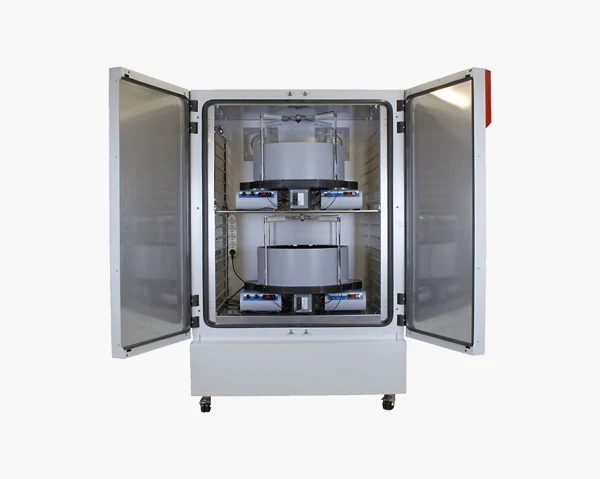
The Balance Beam Walking Test is a classical behavioral assay designed to measure coordination, balance and motor learning in rodents.
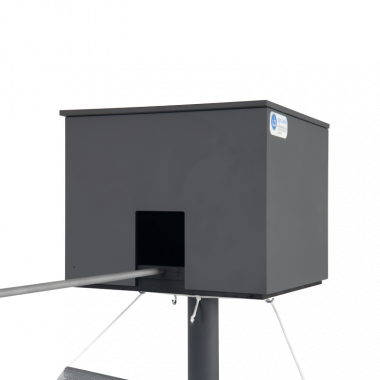
During the test, the mouse is placed on a narrow elevated beam and motivated to traverse it toward a safe box or home cage. The experimenter records the traversal time, speed, number of foot slips, stops, falls and others. They represent a reliable indicator of sensorimotor performance.
This test is particularly valuable for detecting subtle motor impairments in neurological or neurodegenerative models, such as Parkinson’s, Huntington’s, cerebellar ataxia or stroke, where other tests like the Rotarod may lack sensitivity.
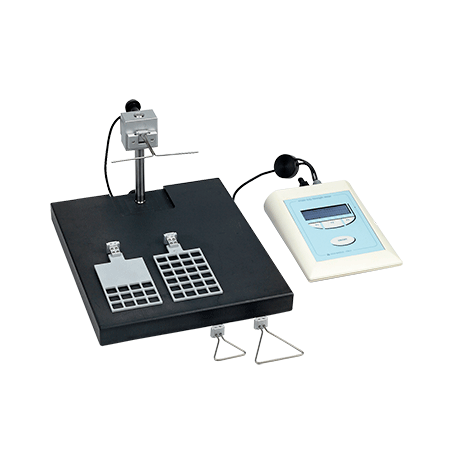
Different beam widths, shapes (eg. circular or square) and textures can be used to modulate task difficulty, and video tracking can be integrated for objective data collection for at least the speed, the time taken, the falls. Automatically tracking paw slips is still challenging.