Background
Locomotion is a complex behavior involving the integration of musculoskeletal, neurological and sensory systems to produce coordinated movement. Because of this, gait is a sensitive marker of pain and motor dysfunction, widely used in motor coordination and motor function models, in neurodegenerative models and injury in general, arthritis, pain and aging (Clark et al., 2019; Sayed-Zahid et al., 2019).
Early approaches to rodent gait analysis, such as inked footprints on paper, provide only coarse information on stride length and paw placement. No temporal parameter (e.g. duty cycle) is available with non-automated systems. While still used for basic screening, these manual methods lack the resolution and objectivity required to detect subtle or early motor deficits. Rodents, as quadrupeds and prey animals, often mask signs of pain or impairment (Mogil, 2015). Their ability to shift weight between limbs (e.g., compensating for hindlimb injury by loading the forelimbs) can further obscure deficits detectable in bipedal species (Saunders et al., 2017).
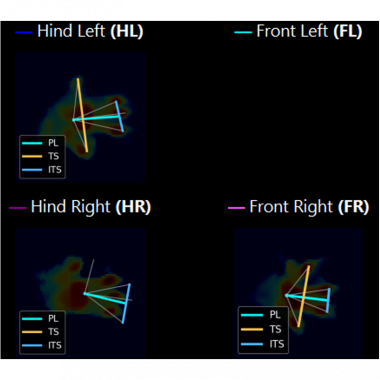
To overcome these challenges, automated gait analysis systems have become essential in neuroscience, pharmacology and toxicology. These tools offer high-resolution, multi-parameter assessments, such as stance duration, stride variability, and interlimb coordination, captured in a naturalistic, unforced walking environment.
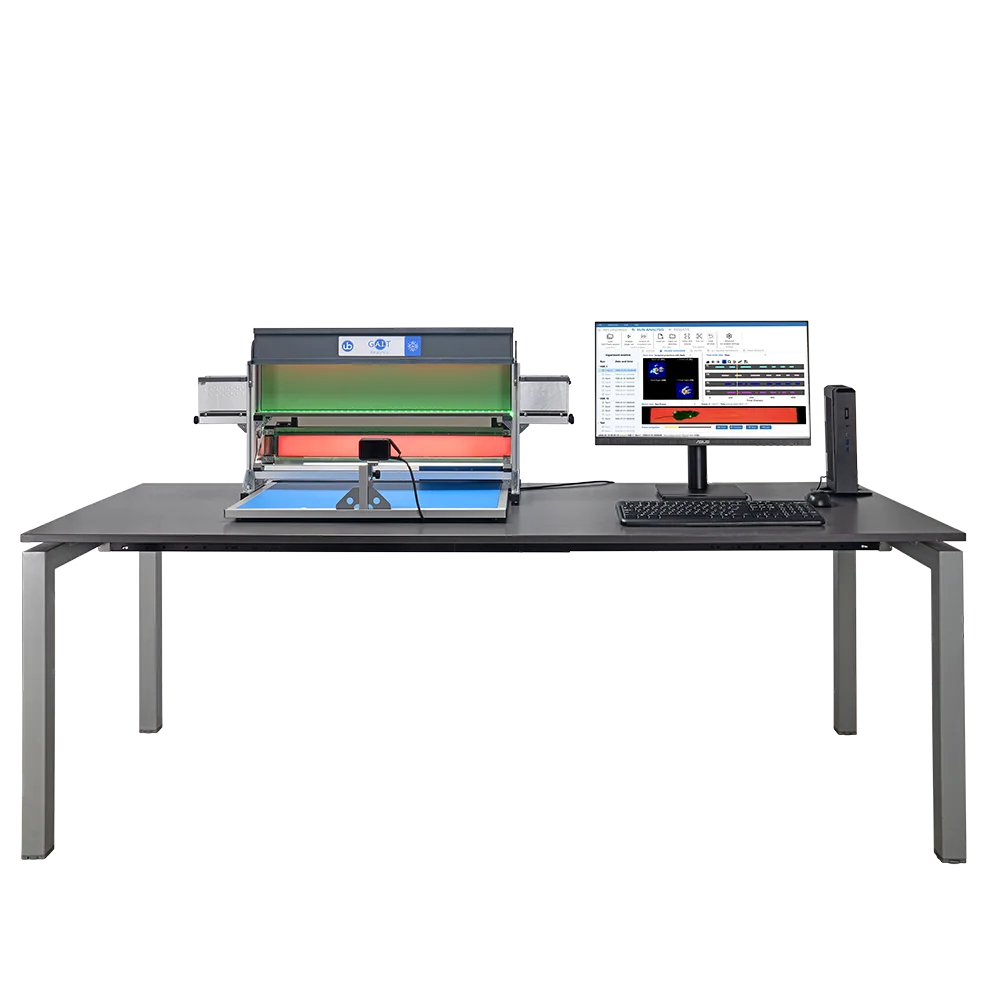
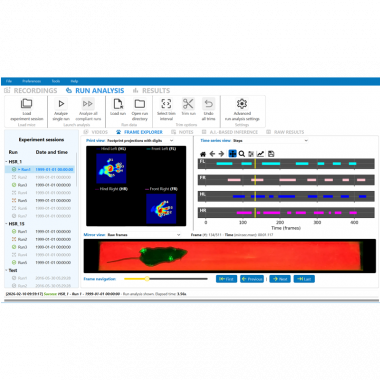
Gait Analysis by Ugo Basile combines A.I. accuracy and plug & play simplicity. Ready to run, right out of the box with pre-installed AI PC.
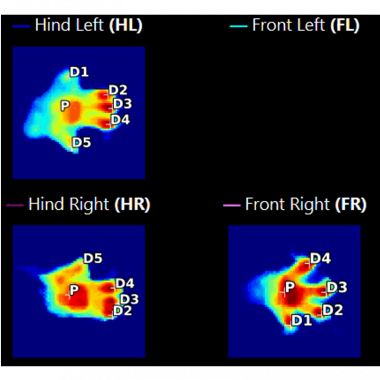
Traditional Gait Analysis system available in the market still show important limitations when it comes to analysis runs outcomes. The innovative Gait Analysis by Ugo Basile is a fully automated table-top system designed to detect gait alterations in rodent models with unmatched ease and accuracy, guaranteeing exact identification of paws, paw digits and other relevant body parts (e.g. head, animal centroid, tail).
The system is powered by proprietary A.I. algorithms that identify even the most subtle gait changes that traditional tools might miss or misidentify. The end result is a huge time-saving and accuracy because no manual paw identification or correction through frame-by-frame manual revision is needed.
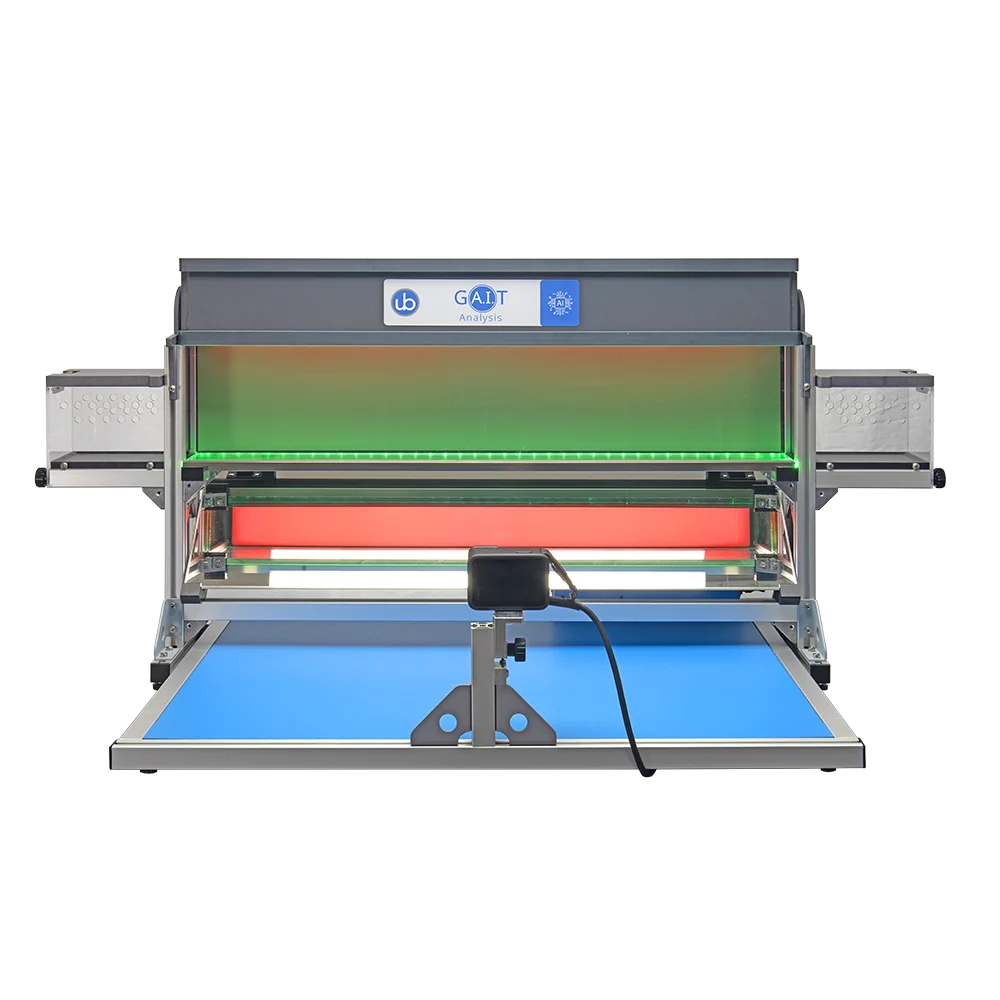
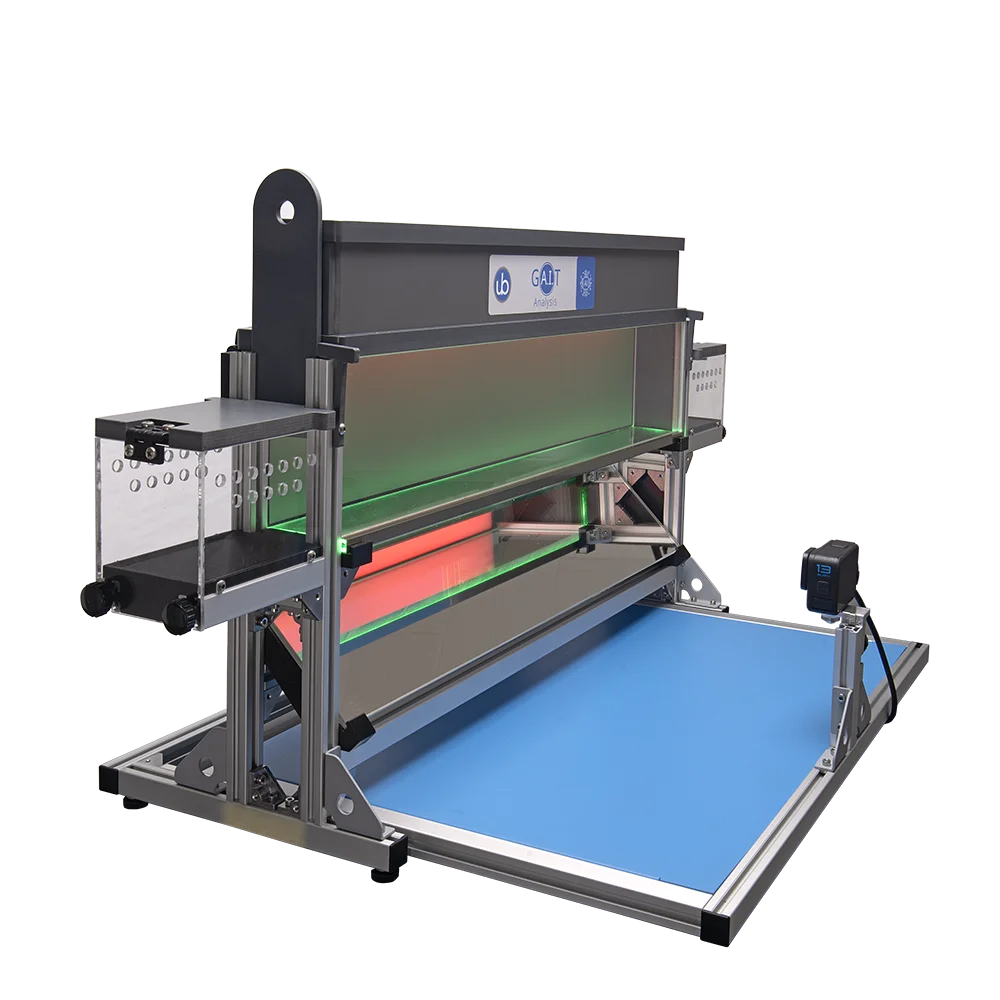
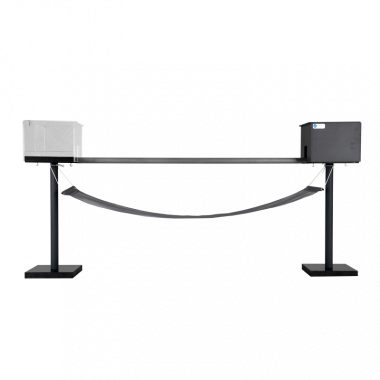
The mouse is moving freely starting from a transparent box to another one to favour back and forth runs, also thanks to the length and width of the corridor designed for mice, differently than other systems designed for rats also.
Once the desired number of comparable runs (i.e. similar speed) has been reached the software will automatically calculate the desired parameters and prompt the next animal.
The corridor floor is made of high-quality glass resistant to scratches and easy to clean. Green LEDs on the side of the corridor provide the frustrated total internal reflection (fTIR) effect, which enhances shapes, contact surfaces and pressure, plus all the other temporal and spatial parameters scientists are interested investigating.
The footprints appear bright green regardless of the mouse fur color (Hamers et al. 2001) and give complete flexibility, enabling step dynamics and semi-quantitative assessment of paw pressure (key in Pain Research and not only).
Two sliding cages are placed on each side of the corridor, each with its own door. They can be easily attached or removed, allowing smooth, stress-free animal handling.
A high frame rate camera is controlled by the software, which handles also background removal (e.g. feces or other artifacts) and detects valid runs automatically in real-time.
The results are saved in Excel format directly on the PC.
UB Gait Analysis is a complete plug-and-play package, including:
- Compact table-top gait device
- Transparent corridor with aluminum frame
- High frame rate camera
- Mirror module
- Dual lighting system (green LED + red light)
- Pre-configured AI PC with dedicated AI software
- Initial training session for lab personnel by Ugo Basile PhD experts
- On-request additional software training for very complex animal models
Its compact design and ease of use make it suitable for any lab bench, even in space-constrained environments.