Quote list0
Your product list is empty!

Animal
Mouse, Rat
Videotracking
Traditional, Infrared

Novel Object Recognition

Product Code:47000
Category: Mazes, Tracking

The Novel Object Recognition (NOR) Test is now among the most commonly used behavioral tests for memory studies in rodents. In its simplest design, an animal is presented with two similar objects during the first session and then one of the two objects is replaced by a new object during a second session or is moved to a different location.

This test is based on the spontaneous tendency of rodents to spend more time exploring a novel object than a familiar one, so that the protocol implies video-tracking or manual measurement of the time spent exploring (or moving toward) the different objects in the different sessions.

An extended warranty can be added for most Ugo Basile products. You can find this information in the ordering information section of each product.
To learn more about the extended warranty, CLICK HERE

Background

The Novel Object Recognition (NOR) test is a widely used behavioral assay in mice to evaluate memory and learning, particularly recognition memory. The test is based on the natural tendency of rodents to explore new objects more than familiar ones. Here's an example of NOR procedure:

  1. Habituation Phase:
    • Mice are placed in an empty arena to familiarize themselves with the environment. This phase helps reduce anxiety and baseline exploration behavior.
  2. Training Phase (Familiarization):
    • Two identical objects are placed in the arena.
    • Mice are allowed to explore these objects for a set amount of time (usually 5-10 minutes).
    • The time spent exploring each object is recorded to ensure that there is no inherent preference for one object.
  3. Testing Phase (Novel Object Recognition):
    • After a delay (ranging from minutes to hours or even days, depending on the experiment's aim), one of the original objects is replaced with a new, novel object.
    • Mice are then reintroduced to the arena and allowed to explore.
    • The time spent exploring the novel object versus the familiar one is recorded.

Interpretation of Results:

  • Higher Novel Object Exploration:
    • Mice that remember the familiar object will spend more time exploring the novel one. This indicates intact recognition memory.
  • Lower Novel Object Exploration:
    • Reduced preference for the novel object may suggest impairments in recognition memory, often used to model cognitive deficits or evaluate the efficacy of therapeutic interventions.

The Novel Object Recognition (NOR) by Ugo Basile are made of resistant plastic material, come in different shapes (sphere, cylinder, cube, pyramid) and different colors.

The Objects come with magnets at the bottom to avoid accidental movement during the test.

General

Colours: black and white standard; other colours available on request

Dimensions

Dimesions

47002 – Rat NOR      

Weight (gr)

Width (mm) Length (mm) Diameter (mm)  Height (mm)

Cube

165 gr

80 mm 80 mm - 80 mm

Sphere

230 gr

- - 100 mm 87,5 mm

Pyramid

130 gr

110 mm base
33 mm top
110 mm base
33 mm top
- 80 mm
Cylinder 130 gr - - 80 mm 80 mm

47003 – Mouse NOR

Weight (gr)

Width (mm). 
Length (mm) 
Diameter (mm)  Height (mm)

Cube

35 gr

40 mm 40 mm - 40 mm

Sphere

35 gr

- - 50 mm 43,7 mm

Pyramid

35 gr

55 mm base
18 mm top

55 mm base
18 mm top

- 40 mm
Cylinder 30 gr - - 40 mm 40 mm

This test is based on the spontaneous tendency of rodents to spend more time exploring a novel object than a familiar one.

The Novel Object Recognition (NOR) test is a widely used behavioral assay in neuroscience to assess recognition memory, a form of declarative memory. It leverages rodents' natural preference for novelty to evaluate cognitive functions, particularly in relation to memory, learning, and brain function. Here are the key applications of the NOR test in behavioral neuroscience:

Memory and Cognitive Function:

  • Recognition Memory: The NOR test is specifically designed to evaluate non-spatial recognition memory, which involves distinguishing between familiar and novel objects.
  • Assessment of Memory Impairment: It is commonly used to study memory deficits in models of neurodegenerative diseases, aging, and brain injury.
  • Short-term and Long-term Memory: By varying the delay between the training and test phases, the test can assess short-term versus long-term memory processes.

Neurodegenerative Disease Models:

  • Alzheimer’s Disease (AD): The test is extensively used to study memory impairment in rodent models of AD and to evaluate potential therapeutic interventions targeting memory deficits.
  • Parkinson’s Disease and Huntington’s Disease: The NOR test is also relevant in studying memory impairments associated with other neurodegenerative conditions.

Pharmacological and Genetic Studies:

  • Drug Development: It serves as a tool to evaluate the efficacy of drugs targeting cognitive impairments, such as acetylcholinesterase inhibitors, NMDA receptor modulators, and other nootropic agents.
  • Genetic Manipulations: The test is used to study the role of specific genes in memory and cognitive function through knockout, knock-in, or transgenic rodent models.

Neural Circuitry and Molecular Mechanisms:

  • Hippocampus and Prefrontal Cortex Function: The NOR test is often combined with lesions, optogenetics, or pharmacological interventions to dissect the role of specific brain regions and circuits.

Behavioral Phenotyping

  • Rodent Strain Comparisons: The NOR test is used to characterize cognitive profiles across different rodent strains to identify innate differences or genetic susceptibilities.

The NOR test’s simplicity, cost-effectiveness, and ability to provide robust data make it a cornerstone in behavioral neuroscience, particularly in studies aimed at understanding memory and cognitive processes in health and disease.

Product

47000

NOR Objects for assesment of memory performance, with different colours and shapes (Piramid, cube, cylinder, sphere)

Videotracking

60000

ANY-maze Software

47400-040

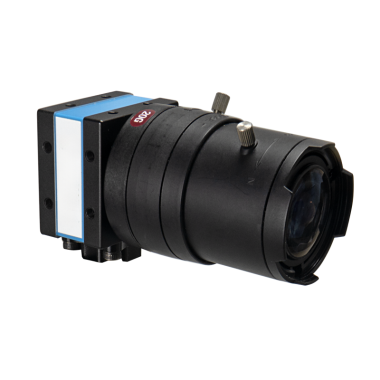
B/W USB Camera, including day&night 2.8-10.0mm varifocal lens, 5m USB cable and ceiling support

Back to: Mazes, Tracking

Research insights

Behavioural neuroscience and preclinical research

Understanding how animals learn, remember and respond to environmental stimuli is central to neuroscience research. Behavioural assays in this domain cover a wide range of constructs, including associative learning, memory consolidation, anxiety, fear extinction, social interaction, stress response, addiction and reward processing.

These paradigms are widely used in preclinical neuropharmacology, translational psychiatry and neuroscience research.

Most used paradigms for behavioural neuroscience, conditioning and reward studies

Behavioural neuroscience relies on a broad range of paradigms to study learning, memory, anxiety, fear, stress, social interaction, addiction and reward processing in rodents. Conditioning paradigms include fear conditioning, active avoidance, passive avoidance and operant conditioning, which are used to investigate associative learning, memory retention, avoidance behaviour, reinforcement learning and goal-directed responses.

Startle and prepulse inhibition (PPI) paradigms are used to assess sensorimotor gating and translational models related to neuropsychiatric disorders like schizophrenia. Maze-based paradigms, including Morris water maze, Barnes maze, Y-maze, T-maze, radial arm maze, elevated plus maze and light/dark box, support the study of spatial learning, working memory, reference memory, anxiety-related behaviour and exploratory decision-making.

Open-field, social interaction, conditioned place preference, self-administration and other reward-related paradigms can be combined with video tracking to quantify locomotion, exploration, freezing, thigmotaxis, preference, social behaviour and reward-driven responses.

Operant systems are also designed for the most common Skinner-like experiments or for very complex tasks like the Attentional Set-Shifting protocol, which mimics the Wisconsin Card Sorting (or Cantab) test in humans.

Key measured parameters and behavioural readouts

Behavioural neuroscience studies rely on readouts that quantify learning, memory, fear responses, avoidance behaviour, exploratory activity, sensorimotor gating, social interaction and reward-related behaviour. Key measured parameters include freezing behaviour, response latency, number of avoidances, number of non-responses, intertrial crossings, startle amplitude, prepulse inhibition, locomotor activity, distance travelled, time spent in specific zones, thigmotaxis, exploration patterns, social interaction metrics and reward-related responses across repeated sessions.

These readouts help researchers assess associative learning, memory consolidation, fear extinction, anxiety-related behaviour, sensorimotor gating, addiction, reward processing and cognitive performance in rodent models. Depending on the experimental paradigm, behavioural data may be collected through conditioning chambers, avoidance systems, startle/PPI platforms, operant setups, mazes, open-field arenas or video-tracking systems. The Ugo Basile portfolio includes Fear Conditioning, Startle/PPI, Active and Passive Avoidance, Operant Conditioning systems, mazes and tracking-compatible behavioural arenas.

Ugo Basile instruments for behavioural neuroscience, conditioning and reward studies

For more than 60 years, Ugo Basile has designed and manufactured instruments for behavioural neuroscience, combining classical paradigms with continuously updated technology.

The Fear Conditioning System is designed to assess cued and contextual fear memory through automated freezing detection, with sound-attenuating chambers, VIS/IR illumination and compatibility with tethered animals for advanced techniques such as optogenetics, electrophysiology and fiber photometry. The system can be expanded up to multiple chambers and can also be upgraded to Startle/PPI using the same cubicle and electronics.

The Startle PPI 3.0 system is used to measure sensorimotor gating in rodents through startle responses to pulses and prepulses, with flexible software-driven protocol design and dedicated mouse and rat platforms.

Ugo Basile also offers Operant Conditioning solutions for reinforcement learning, goal-directed behaviour and reward-based experimental paradigms.

For avoidance learning and memory, Ugo Basile provides Active Avoidance and Passive Avoidance systems. Active Avoidance allows researchers to measure avoidances, non-responses, response latency and intertrial crossings in shuttle-box paradigms, while Passive Avoidance is used to assess short- and long-term memory based on fear-motivated learning.

The Conditioned Place Preference (CPP) test is a widely used behavioral paradigm for evaluating the motivational properties of rewarding or aversive experiences. The CPP paradigm provides information on the rewarding or aversive effects of visible and tactile contextual cues associated with drugs.

Frequently Asked Questions

What behavioural paradigms are used in preclinical neuroscience?

Preclinical behavioural neuroscience uses a wide range of paradigms to study learning, memory, anxiety, fear, stress, reward, addiction, social behaviour and exploratory activity. Common paradigms include fear conditioning, active avoidance, passive avoidance, operant conditioning, startle and prepulse inhibition, open field, social interaction tests, conditioned place preference, Morris water maze, Barnes maze, Y-maze, T-maze and radial arm maze.