

From molecular mechanisms to behavioral outcomes: Ugo Basile instruments in Alzheimer’s research
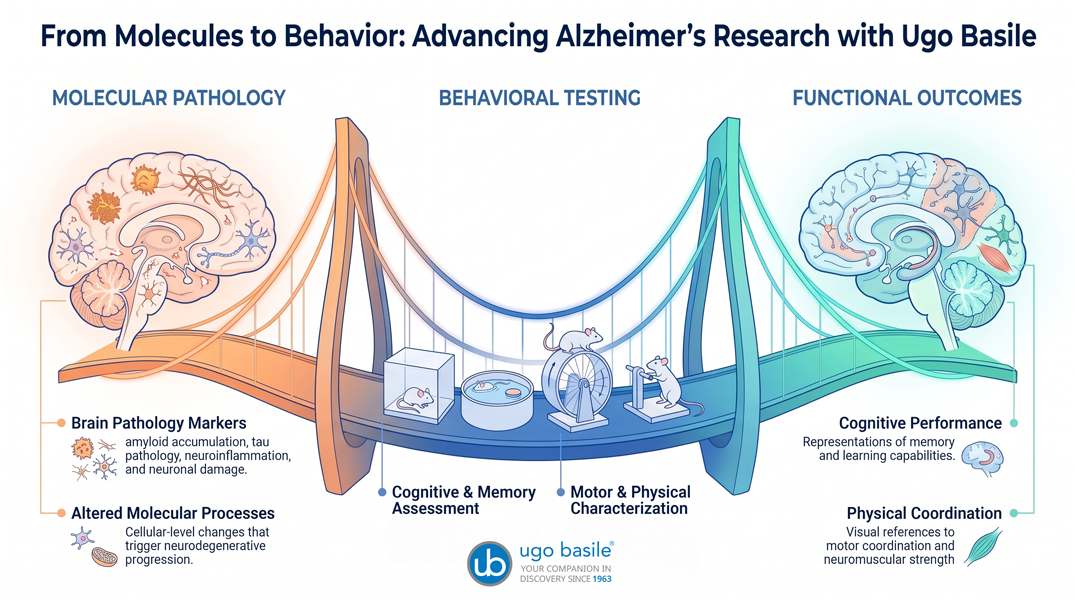
Alzheimer’s disease is a complex neurodegenerative disorder involving interconnected pathological processes, including amyloid-β accumulation, tau hyperphosphorylation, neuroinflammation, impaired neurotransmission, vascular alterations and neuronal loss. Understanding these mechanisms requires more than molecular and histological analysis: researchers must also determine how biological changes affect memory, learning, motor performance and other functional outcomes.
Across different preclinical studies, Ugo Basile instruments have supported researchers in connecting molecular and neuropathological findings with measurable behavioral responses.
Early neuronal changes and memory dysfunction
Alzheimer’s disease is commonly associated with pathological alterations in the hippocampus and cerebral cortex. However, other neuronal populations may also be affected during the early stages of the disease.
In the study Dopamine neuronal loss contributes to memory and reward dysfunction in a model of Alzheimer’s disease, published in Nature Communications, Nobili and colleagues investigated the dopaminergic system in the Tg2576 mouse model of Alzheimer’s disease. The researchers identified an age-dependent loss of dopaminergic neurons in the ventral tegmental area during the pre-plaque stages of the model. This degeneration was associated with reduced dopamine release in the hippocampus and nucleus accumbens, impaired hippocampal synaptic plasticity, memory deficits and alterations in reward processing (Nobili et al., 2017).
Contextual memory was evaluated using a the Contextual Fear Conditioning System by Ugo Basile. During training, the mice received three non-signalled foot shocks. Twenty-four hours later, they were returned to the same chamber without receiving a shock, allowing the researchers to assess their memory of the experimental context.
By combining behavioral, electrophysiological and biochemical analyses, the study identified dopaminergic degeneration as a potentially important early event contributing to cognitive and non-cognitive dysfunction in this Alzheimer’s disease model.
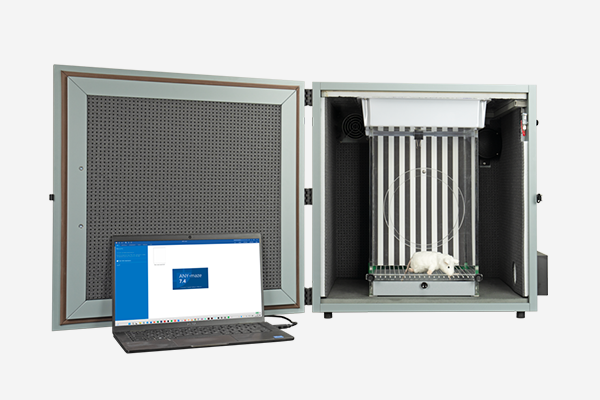
Learn more about Fear Conditioning System by Ugo Basile: https://ugobasile.com/products/categories/behaviour-conditioning-reward/fear-conditioning-system
Neuroinflammation, leukocyte trafficking and memory
Growing evidence suggests that vascular inflammation and the movement of immune cells across the blood-brain barrier may contribute to Alzheimer’s disease progression.
In the study Blockade of α4 integrins reduces leukocyte–endothelial interactions in cerebral vessels and improves memory in a mouse model of Alzheimer’s disease, Pietronigro and colleagues investigated the role of α4 integrins in leukocyte–endothelial interactions using the 3xTg-AD mouse model. These mice develop both amyloid-β and tau-related pathology. The study demonstrated that blocking α4 integrins reduced leukocyte interactions with cerebral blood vessels and improved memory performance. The treatment also reduced several neuropathological hallmarks, including microgliosis, amyloid-β load and tau hyperphosphorylation (Pietronigro et al., 2019).
The researchers employed two Ugo Basile systems to investigate cognitive performance. Spatial learning and memory were assessed using a Ugo Basile Morris Water Maze, while contextual and associative memory were evaluated using Ugo Basile Fear Conditioning System controlled through ANY-maze software.
These behavioral assessments enabled the authors to relate changes in neuroinflammatory processes and neuropathological markers to measurable cognitive outcomes. The findings suggested that α4 integrin-dependent leukocyte trafficking contributes to memory impairment and Alzheimer’s-related neuropathology.
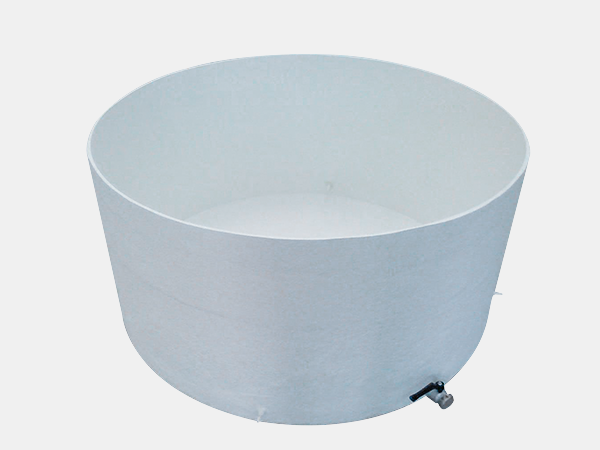
Lear more about Morris Water Maze by Ugo Basile https://ugobasile.com/products/categories/mazes-tracking/circular-pools-for-morris-water-maze-test
Lear more about Fear Conditioning System by Ugo Basile https://ugobasile.com/products/categories/behaviour-conditioning-reward/fear-conditioning-system
Sex-related factors in preclinical Alzheimer’s disease
Women have a higher risk of developing Alzheimer’s disease than men, but the relationship between ovarian hormones, menopause and disease progression remains complex.
In a study Ovariectomy attenuates phenotypes related to Alzheimer’s disease in a preclinical mouse model and in C57BL/6 J mice, published in Scientific Reports, Fujii and colleagues investigated the effects of ovarian hormone deprivation in App^NL-G-F/NL-G-F knock-in mice. Unlike transgenic models based on App overexpression, this model carries a single amyloid precursor protein gene mutation and reproduces features associated with early amyloid pathology (Fujii et al., 2025).
The researchers subjected ovariectomized and sham-operated App knock-in and wild-type mice to a comprehensive behavioral test battery. The App mutation was associated with reduced anxiety-like behavior and impaired performance in a fear-memory task. Ovariectomy restored anxiety-like behavior in App knock-in mice to levels comparable with wild-type animals, improved fear-memory performance in both genotypes and reduced amyloid-β staining in wild-type mice.
As part of the behavioral characterization, motor coordination and balance were assessed using an Ugo Basile RotaRod. The drum accelerated from 4 to 40 rpm over five minutes, and the time each animal remained on the apparatus was measured across six trials.
The findings highlight the complexity of the relationship between ovarian hormone deprivation and Alzheimer’s-related phenotypes, while demonstrating the importance of comprehensive behavioral assessment when characterizing preclinical disease models.
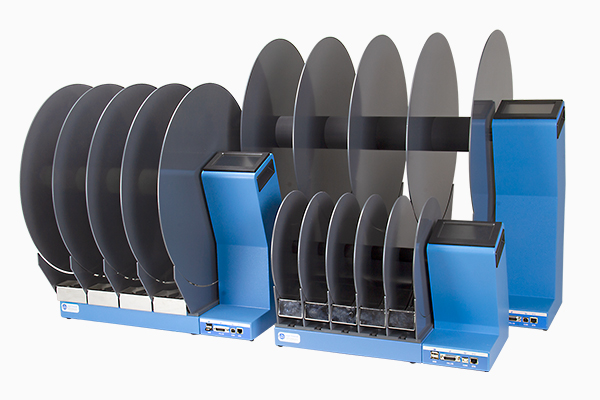
Learn more about RotaRod by Ugo Basile https://ugobasile.com/products/categories/motory-coordination/rotarod-for-mice-and-rats
Cholinergic dysfunction and non-pharmacological stimulation
Cholinergic dysfunction is an important contributor to the memory impairment observed in Alzheimer’s disease and other age-related neurological disorders.
In the Study Transcranial vibrotactile stimulation enhances hippocampal cholinergic signaling and memory through frequency-dependent mechanotransduction, Kim and colleagues investigated the effects of transcranial vibrotactile stimulation in mice with scopolamine-induced acute cholinergic dysfunction. The researchers developed a head-mounted system capable of delivering controlled cranial stimulation at 20, 40 or 80 Hz (Kim et al., 2026).
Stimulation at 40 and 80 Hz improved performance in memory tests, enhanced hippocampal cholinergic function, reduced oxidative damage and increased the expression of genes involved in memory-related signaling pathways, including BDNF, PI3K, AKT, ERK1/2, CREB and CAMK4.
Memory retention was evaluated using an Ugo Basile Passive Avoidance apparatus. During training, mice learned to associate entry into the dark compartment with a mild foot shock. Retention was assessed 24 hours later by measuring the latency to re-enter the dark compartment in the absence of a shock.
Although the experiment did not use a pathological or genetic model of Alzheimer’s disease, it investigated cholinergic dysfunction—a mechanism closely associated with cognitive impairment in Alzheimer’s and other neurodegenerative conditions. The study therefore provides an example of how behavioral testing can support the preclinical investigation of new non-pharmacological approaches to memory impairment.
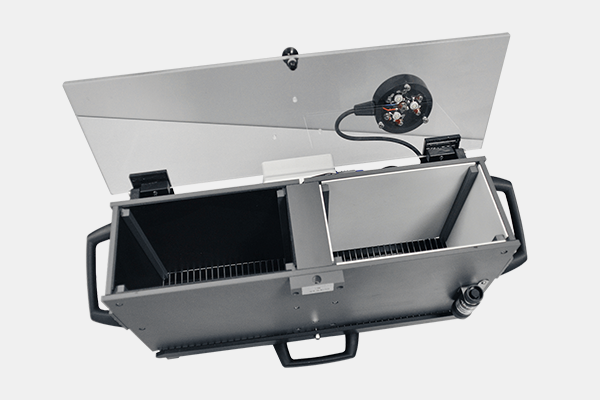
Learn more about Passive Avoidance by Ugo Basile https://ugobasile.com/products/categories/behaviour-conditioning-reward/passive-avoidance-for-mice
When molecular damage does not yet result in an overt behavioral phenotype
Behavioral measurements are also important when significant molecular alterations do not produce immediately observable functional deficits.
In the study A human Staufen1 BAC transgenic mouse exhibits abnormal autophagy and neurodegeneration across the central nervous system published in Cell Death & Disease, Pulst and colleagues developed a transgenic mouse carrying the entire human STAU1 gene. Staufen1 is an RNA-binding protein that is overabundant in models of several neurodegenerative conditions, including Alzheimer’s disease, amyotrophic lateral sclerosis and spinocerebellar ataxia type 2 (Pulst et al., 2026).
The BAC-STAU1 mice exhibited abnormal autophagy, altered gene expression, glial activation, increased markers associated with apoptosis and changes in neuronal proteins. Reducing STAU1 abundance through RNA interference improved several of these molecular abnormalities.
Despite these molecular and cellular alterations, forelimb and hindlimb grip-strength measurements performed using an Ugo Basile Grip Strength Meter, together with rotarod testing, did not reveal sustained or progressive motor deficits up to 55 weeks of age.
The findings indicate that STAU1 overabundance can produce molecular and cellular signs of neurodegeneration before the emergence of an overt behavioral phenotype. This study was not conducted in an Alzheimer’s-specific model, but it provides insight into a molecular mechanism associated with different neurodegenerative disorders, including Alzheimer’s disease.

Learn more about Grip Strength Meter by Ugo Basile https://ugobasile.com/products/categories/motory-coordination/grip-strength-meter-gsm-for-mice-and-rats
Connecting biological mechanisms with functional outcomes
These studies address different components of Alzheimer’s disease and neurodegeneration: early dopaminergic loss, vascular inflammation, hormonal factors, cholinergic dysfunction and impaired autophagy.
What they share is the need to determine whether molecular and cellular changes are accompanied by functional consequences. Behavioral tests provide researchers with complementary measurements of:
- contextual and associative memory;
- spatial learning and memory;
- memory retention;
- motor coordination and balance;
- neuromuscular strength.
No individual test can capture the full complexity of Alzheimer’s disease. When combined with molecular, cellular, histological and electrophysiological analyses, however, carefully selected behavioral paradigms help researchers characterize disease models, investigate pathological mechanisms and assess potential interventions.
For more than 60 years, Ugo Basile has developed instruments for behavioral neuroscience and preclinical research, supporting laboratories in obtaining controlled, objective and reproducible functional measurements.
On Alzheimer’s Day, we recognize the researchers working to understand this complex disease and reaffirm our commitment to developing technologies that support their work.
References
- Nobili A, Latagliata EC, Viscomi MT, et al. Dopamine neuronal loss contributes to memory and reward dysfunction in a model of Alzheimer’s disease. Nature Communications. 2017;8:14727. doi: 10.1038/ncomms14727
- Pietronigro EC, Zenaro E, Della Bianca V, et al. Blockade of α4 integrins reduces leukocyte–endothelial interactions in cerebral vessels and improves memory in a mouse model of Alzheimer’s disease. Scientific Reports. 2019;9:12055. doi: 10.1038/s41598-019-48538-x
- Fujii K, Koshidaka Y, Yanagibashi Y, Adachi M, Matsuo M, Kimura K, et al. Ovariectomy attenuates phenotypes related to Alzheimer’s disease in a preclinical mouse model and in C57BL/6J mice. Scientific Reports. 2025;15:36995. doi: 10.1038/s41598-025-20006-9
- Kim OH, Shin CH, Cho MW, Ha JY, Choung JJ, Song DK, et al. Transcranial vibrotactile stimulation enhances hippocampal cholinergic signaling and memory through frequency-dependent mechanotransduction. Scientific Reports. 2026;16:18607. doi: 10.1038/s41598-026-49377-3.
- Pulst SM, Paul S, Nguyen H, Dansithong W, Figueroa KP, Gandelman M, Bonini NM, Scoles DR. A human Staufen1 BAC transgenic mouse exhibits abnormal autophagy and neurodegeneration across the central nervous system. Cell Death & Disease. 2026;17:620. doi: 10.1038/s41419-026-08830-x