Quote list0
Your product list is empty!

Animal
Mouse, Rat

Passive Avoidance for Mice

Product Code:40553

Passive Avoidance Test is used to assess memory function based on the association formed between a specific environmental context, which the animal learns to avoid and an aversive stimulus – represented by a mild foot shock.

Efficient and reliable. Silent, automated sliding door divides the dark and light compartments. Systems for mice or rats. Manage up to 4 cages with one controller..

Model
An extended warranty can be added for most Ugo Basile products. You can find this information in the ordering information section of each product.
To learn more about the extended warranty, CLICK HERE

Background

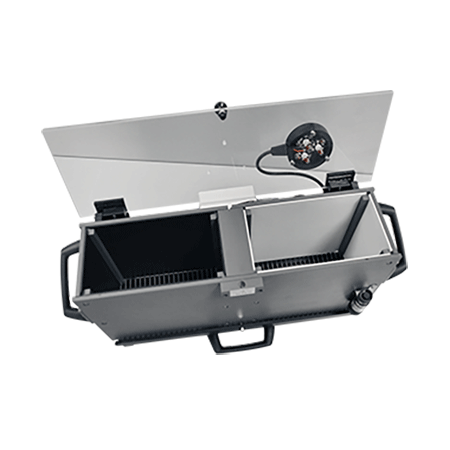
  • Tests are conducted in a two-compartment cage divided by an automated, silent sliding door. The first compartment is dimly lit (preferable to a rodent), and the second is brightly lit.


Reliable, convenient, flexible

  • The tilting floor ensures a simple and reliable detection mechanism to score the animal’s movement across the two compartments.
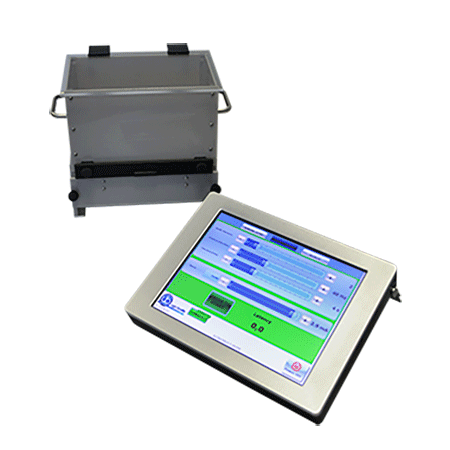
  • Easy, convenient testing using the 12 inch touch screen Controller: 
    • Set up and manage both Passive and Active Avoidance Tests including the 8-pole shocker.
    • Connect up to 4 cages to the same Controller (using Expansion Box for each additional cage). 
    • Data is recorded, displayed and stored in the control unit. Transfer test data to your PC using the USB key (supplied) for further processing using Excel, Access, etc. 
  • Set ups available for mice and rats.
  • Part of the expandable, convenient Beehive System. The same Controller can manage different conditioning tests. Ask for details!

Features

Benefits

Tilt-floor detection mechanism

Reliable and precise detection of animal crossing

No stepping motor!

Silent and automated sliding door to divide the two compartments

Remote Control feature

Makes remote service and software upgrades extremely simple!

Great Versatility

The same controller can manage different conditioning tests. Ask for details!

Touch Screen Controller

LCD

12” with resistive touch screen

CPU Module Port

2 USB Port 2.0; 1 Ethernet port 10/100Mb;1 DVI port for external monitor

Peripheral Port

4 output for Sound, Shock and  light; 1 Power supply 12V-2A

Expansion Bus Connection

2 RJ11 connectors

General

Latency Time

5-digit Read-Out, 0.1s steps

Door Delay

1-300s, in steps of 1s

Delay after crossing door

0.2 to 3.0s

Shock/Pulse Duration

0.1-9.9s, in steps of 0.1s

Shock Intensity

0.1-3mA, in steps of 0.1mA

CutOff Time

0-600s, in steps of 1s

Shock/Pulse Pause

0-9.9s

Shock/Pulse Train

0-9 stimuli

Visible Light

Variable from 0 to 1800 Lux (0-100%)

Operating Temperature

10° to 40°C

Sound Level

Negligible

Pollution Degree

≤ 2

Number of Cages

Up to 4 (with expansion boxes)

Physical

Dimensions

25(d)x33(w)x5.5(h)cm (40500-001)

57x27x30(h)cm, I.D. 48x20x22(h)cm (40552) 47x18x25(h)cm, I.D. 38x9x17(h)cm (40553)

Weight

2.7Kg (40500-001)

5.3Kg (40552)

3.4Kg (40553)

Shipping Weight

4Kg (40500-001)

9Kg (40552)

5.8Kg (40553)

Packing Dimensions

80x60x44cm (Control Unit & one cage)

Warranty

Warranty Passive Avoidance is covered by a 12-month warranty + 12 after product registration 
UB-Care Additional UB-Care can be added for other 12 or 24 months

Behavioral scientists are well acquainted with passive avoidance methods that have been used for several decades, originally by psychologists, who were interested in animal behavior.
These procedures were later exploited by neuroscientists, who specifically perform sys-tematic studies of the behavioral changes mainly produced by brain lesions, to define the functions of different C.N.S. sections.
The Passive Avoidance was soon extended to several other areas of research such as behavior genetics, psychopharmacology and behavioral toxicology. More recently, such use has become routine in animal model studies of aging and of Alzheimer-type demen-tia, including the search for new drugs of potential therapeutic value, consisting of atten-uation of behavioral deficits.
The Passive Avoidance task is a one trial fear-motivated avoidance task, classically used to assess short-term or long-term memory on small laboratory animals (rodents).

The spontaneous avoidance of bright environments is exploited to measure memory in mice or rats. This classic method was used in virtually any area of neuroscience, from behavior genetics to psychopharmacology and behavioral toxicology. Currently very common in aging studies for Alzheimer-type dementia, including screening of new drugs attenuating behavioral deficits.

The Passive Avoidance task is a one trial fear motivated avoidance task, classically used to assess short term or long-term memory on small laboratory animals (rodents).

Passive Avoidance Set-Up, Rat

40500-001

Controller with Touch Screen and 8-pole Scrambling Shocker

40550-010

Software and activation for Passive Avoidance Test

40552

P.A. Rat Cage

52010-323

USB Cable

E-AU 041

USB pen-drive, including

40550-302

Instruction Manual  

Passive Avoidance Set-Up, Mouse

40500-001

Controller with Touch Screen and 8-pole Scrambling Shocker

40550-010

Software and activation for Passive Avoidance Test

40553

P.A. Mouse Cage

52010-323

USB Cable

E-AU 041

USB pen-drive, including

40550-302

Instruction Manual  

Back to: Behaviour, Conditioning, Reward

Research insights

Behavioural neuroscience and preclinical research

Understanding how animals learn, remember and respond to environmental stimuli is central to neuroscience research. Behavioural assays in this domain cover a wide range of constructs, including associative learning, memory consolidation, anxiety, fear extinction, social interaction, stress response, addiction and reward processing.

These paradigms are widely used in preclinical neuropharmacology, translational psychiatry and neuroscience research.

Most used paradigms for behavioural neuroscience, conditioning and reward studies

Behavioural neuroscience relies on a broad range of paradigms to study learning, memory, anxiety, fear, stress, social interaction, addiction and reward processing in rodents. Conditioning paradigms include fear conditioning, active avoidance, passive avoidance and operant conditioning, which are used to investigate associative learning, memory retention, avoidance behaviour, reinforcement learning and goal-directed responses.

Startle and prepulse inhibition (PPI) paradigms are used to assess sensorimotor gating and translational models related to neuropsychiatric disorders like schizophrenia. Maze-based paradigms, including Morris water maze, Barnes maze, Y-maze, T-maze, radial arm maze, elevated plus maze and light/dark box, support the study of spatial learning, working memory, reference memory, anxiety-related behaviour and exploratory decision-making.

Open-field, social interaction, conditioned place preference, self-administration and other reward-related paradigms can be combined with video tracking to quantify locomotion, exploration, freezing, thigmotaxis, preference, social behaviour and reward-driven responses.

Operant systems are also designed for the most common Skinner-like experiments or for very complex tasks like the Attentional Set-Shifting protocol, which mimics the Wisconsin Card Sorting (or Cantab) test in humans.

Key measured parameters and behavioural readouts

Behavioural neuroscience studies rely on readouts that quantify learning, memory, fear responses, avoidance behaviour, exploratory activity, sensorimotor gating, social interaction and reward-related behaviour. Key measured parameters include freezing behaviour, response latency, number of avoidances, number of non-responses, intertrial crossings, startle amplitude, prepulse inhibition, locomotor activity, distance travelled, time spent in specific zones, thigmotaxis, exploration patterns, social interaction metrics and reward-related responses across repeated sessions.

These readouts help researchers assess associative learning, memory consolidation, fear extinction, anxiety-related behaviour, sensorimotor gating, addiction, reward processing and cognitive performance in rodent models. Depending on the experimental paradigm, behavioural data may be collected through conditioning chambers, avoidance systems, startle/PPI platforms, operant setups, mazes, open-field arenas or video-tracking systems. The Ugo Basile portfolio includes Fear Conditioning, Startle/PPI, Active and Passive Avoidance, Operant Conditioning systems, mazes and tracking-compatible behavioural arenas.

Ugo Basile instruments for behavioural neuroscience, conditioning and reward studies

For more than 60 years, Ugo Basile has designed and manufactured instruments for behavioural neuroscience, combining classical paradigms with continuously updated technology.

The Fear Conditioning System is designed to assess cued and contextual fear memory through automated freezing detection, with sound-attenuating chambers, VIS/IR illumination and compatibility with tethered animals for advanced techniques such as optogenetics, electrophysiology and fiber photometry. The system can be expanded up to multiple chambers and can also be upgraded to Startle/PPI using the same cubicle and electronics.

The Startle PPI 3.0 system is used to measure sensorimotor gating in rodents through startle responses to pulses and prepulses, with flexible software-driven protocol design and dedicated mouse and rat platforms.

Ugo Basile also offers Operant Conditioning solutions for reinforcement learning, goal-directed behaviour and reward-based experimental paradigms.

For avoidance learning and memory, Ugo Basile provides Active Avoidance and Passive Avoidance systems. Active Avoidance allows researchers to measure avoidances, non-responses, response latency and intertrial crossings in shuttle-box paradigms, while Passive Avoidance is used to assess short- and long-term memory based on fear-motivated learning.

The Conditioned Place Preference (CPP) test is a widely used behavioral paradigm for evaluating the motivational properties of rewarding or aversive experiences. The CPP paradigm provides information on the rewarding or aversive effects of visible and tactile contextual cues associated with drugs.

Frequently Asked Questions

What behavioural paradigms are used in preclinical neuroscience?

Preclinical behavioural neuroscience uses a wide range of paradigms to study learning, memory, anxiety, fear, stress, reward, addiction, social behaviour and exploratory activity. Common paradigms include fear conditioning, active avoidance, passive avoidance, operant conditioning, startle and prepulse inhibition, open field, social interaction tests, conditioned place preference, Morris water maze, Barnes maze, Y-maze, T-maze and radial arm maze.