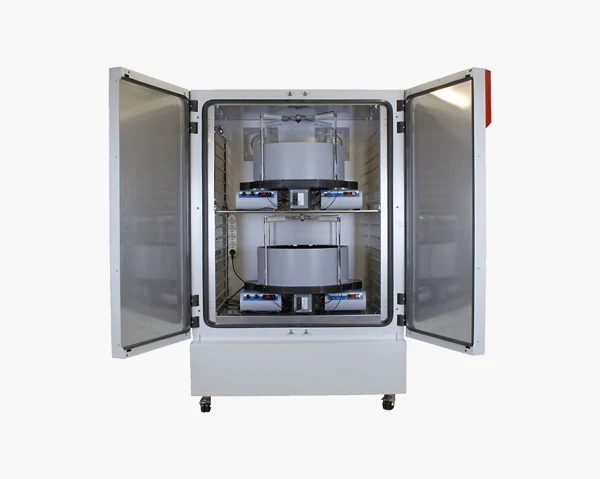


From Gut to Brain: How a Thermal Gradient Ring Helped Map the Brain's Visceral Pain Circuit
Ugo Basile TGR Contributes to Visceral Pain Research at Harvard Medical School
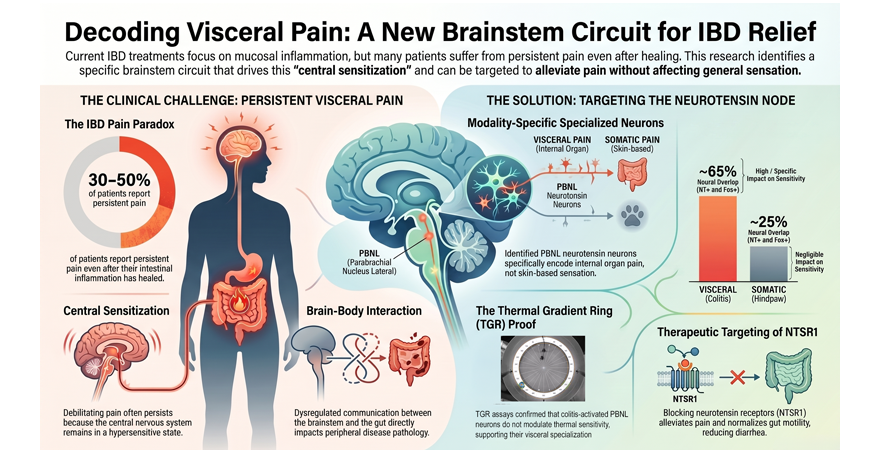
Understanding how the brain encodes and sustains visceral pain is one of the central challenges in gastroenterology and pain neuroscience. The recent preprint “Colitis-induced visceral pain recruits central neurotensin neurons that modulate colonic sensitivity” from Boston Children's Hospital and Harvard Medical School (Cheng et al., bioRxiv, March 2026) represents a significant step forward: using a DSS-induced colitis mouse model, the authors identified a population of neurotensin (NT)-expressing neurons in the lateral parabrachial nucleus (PBNL) that are selectively activated during gut inflammation, encode nociceptive signals in an intensity-dependent manner, and modulate both pain behavior and peripheral gastrointestinal function.
What makes this study particularly compelling, both scientifically and methodologically, is the breadth of its behavioral phenotyping strategy. Capturing the full sensory and affective signature of visceral pain required instruments capable of delivering precise, reproducible readouts across multiple modalities. The Thermal Gradient Ring by Ugo Basile was among the tools selected for this purpose.
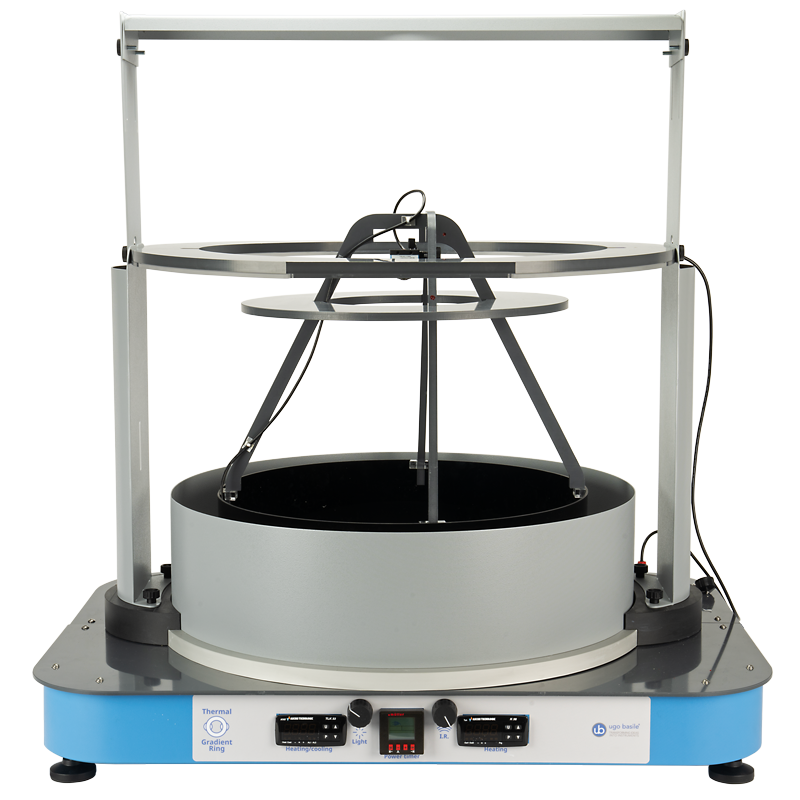
Learn more about Thermal Gradient Ring by Ugo Basile: https://ugobasile.com/products/categories/pain-and-inflammation/new-thermal-gradient-ring-tgr-zimmermann-s-method-2-0
The Study at a Glance
Using a dextran sulfate sodium (DSS)-induced colitis mouse model, researchers identified a specific population of neurotensin (NT)-expressing neurons in the lateral parabrachial nucleus (PBNL) of the brainstem that are selectively activated during gut inflammation. These neurons encode colon-derived nociceptive signals in an intensity-dependent manner, modulate colonic reflexes, regulate gastrointestinal transit and drive aversive affective states.
Critically, silencing these neurons, either chemogenetically or via tetanus toxin-mediated synaptic blockade, not only reduced pain-related behaviors but also attenuated colonic hypersensitivity and normalized gut motility. Pharmacological blockade of neurotensin receptor 1 (NTSR1) in the central amygdala produced similar results, pointing to a PBN→CeA neurotensin circuit as a promising therapeutic target.
Perhaps most striking: this effect was more sustained than direct nociceptor silencing, suggesting that central neurotensin neurons operate at a higher-order integrative node in the visceral pain pathway, one that feeds back onto peripheral organ function.
A Multimodal Behavioral Toolkit
What makes this study methodologically notable is the breadth and sophistication of its behavioral phenotyping. The researchers combined automated machine learning-based behavior classification, chemogenetics, fiber photometry, and a range of sensory assays to build a comprehensive picture of pain across modalities.
Among the instruments used, the Thermal Gradient Ring by Ugo Basile played a specific role in characterizing thermal sensitivity and temperature preference, key behavioral readouts for comparing the modality-specificity of distinct PBNL neuronal populations. In this context, the TGR was used specifically in the zymosan hind paw inflammation group, the somatic pain comparator — to assess thermal sensitivity and temperature preference in freely moving mice. Combined with the fiber photometry and RNA scope data from the colitis group, these readouts helped establish that PBNL neurotensin neurons are preferentially engaged by visceral, not somatic, afferent inputs. The TGR's continuous 10–55°C gradient and compatibility with ANY-maze automated tracking provided the resolution needed to capture these subtle differences across experimental groups.
Learn more about Thermal Gradient Ring by Ugo Basile: https://ugobasile.com/products/categories/pain-and-inflammation/new-thermal-gradient-ring-tgr-zimmermann-s-method-2-0
A hot plate assay was also employed to assess thermal nociceptive thresholds, a well-established paradigm for evaluating supraspinal pain processing. Ugo Basile offers a fully integrated Hot/Cold Plate designed for precisely this purpose, with programmable temperature settings and an enclosed test chamber that ensures consistent, reproducible measurements.
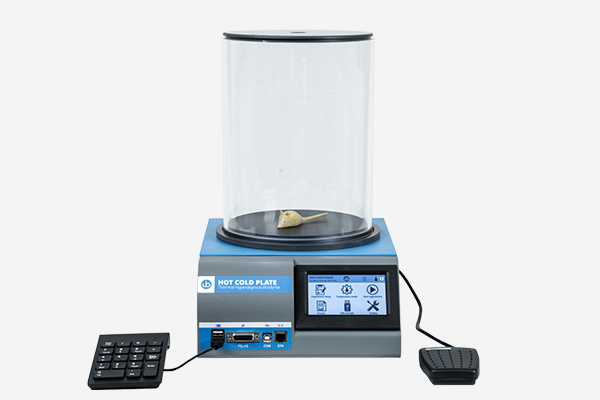
Learn more about Hot/Cold Plate by Ugo Basile: https://ugobasile.com/products/categories/pain-and-inflammation/hot-cold-plate-screening-of-thermal-hyperalgesia-allodynia
Mechanical sensitivity was assessed using von Frey filaments applied to both the plantar hindpaw and the lower abdomen a standard approach for quantifying allodynia and referred cutaneous hypersensitivity in visceral pain models. While filaments remain widely used, they carry well-known limitations: operator variability, subjective endpoint detection, and limited throughput. For researchers seeking greater precision and reproducibility, Ugo Basile recommends two automated alternatives:
- The Dynamic Plantar Aesthesiometer applies an automated, ramped mechanical stimulus to the plantar surface from below and captures the paw withdrawal threshold with high sensitivity, making it the instrument of choice for hindpaw mechanical allodynia in inflammatory and neuropathic pain models.
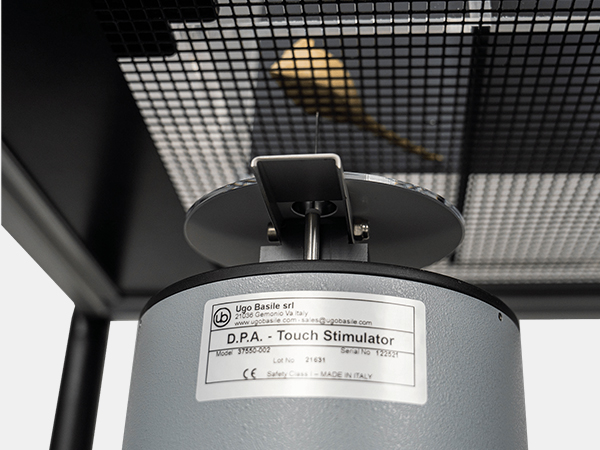 Learn more about Dynamic Plantar Aesthesiometer: https://ugobasile.com/products/categories/pain-and-inflammation/dynamic-plantar-aesthesiometer-for-mechanical-stimulation
- The Electronic Von Frey delivers a continuously increasing force via a rigid tip and records the exact withdrawal threshold electronically, eliminating inter-operator variability and providing a clear, objective readout. It is particularly well suited to abdominal sensitivity testing, as used in this study.
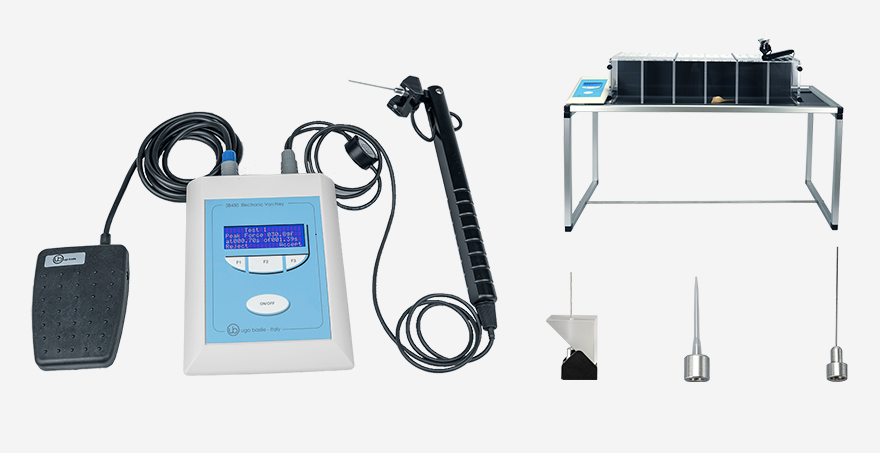 Learn more about EvF https://ugobasile.com/products/categories/pain-and-inflammation/electronic-von-frey-e-vf-handheld
Both instruments are designed to reduce animal stress, improve data quality, and increase experimental throughput compared to manual filament methods.
Conclusion
This study is a reminder that visceral pain research requires tools capable of detecting subtle, multimodal behavioral signals across a dynamic disease timeline. From thermal preference to mechanical allodynia, from gut motility to affective aversion, the behavioral landscape of colitis is broad and the instruments used to map it must be equally versatile.
At Ugo Basile, we design our pain research instruments with exactly this complexity in mind: robust, automated and compatible with the behavioral software platforms researchers already rely on.
Reference: Cheng et al., "Colitis-induced visceral pain recruits central neurotensin neurons that modulate colonic sensitivity", bioRxiv, March 2026. https://doi.org/10.64898/2026.02.27.708254