


Research insights
Preclinical research in pain and inflammation
Pain affects an estimated 20% of adults worldwide, with millions of new chronic pain cases diagnosed every year. Yet, it remains insufficiently addressed as a major public health issue. Recognizing pain as a complex condition influenced by biological, social and environmental factors is essential to improve research, prevention, treatment and health policies.
Developing safer and more effective pain management strategies requires a deeper understanding of the biological mechanisms underlying pain and inflammation. In this context, preclinical research plays a fundamental role in identifying therapeutic targets, evaluating novel treatments and generating evidence to support translation into clinical practice.
Most used paradigms for pain and inflammation research
Pain and inflammation research uses a combination of evoked and spontaneous paradigms to assess nociception, hypersensitivity, inflammatory responses and pain-related impairment in rodents. Evoked thermal paradigms include plantar stimulation, tail flick, hot/cold plate testing, thermal place preference and thermal gradient assessment, which are used to investigate heat sensitivity, cold sensitivity, thermal hyperalgesia, allodinya and thermal preference or avoidance.
Mechanical paradigms include dynamic plantar stimulation, electronic or manual Von Frey testing, paw pressure testing and direct joint pressure application, supporting the assessment of mechanical allodynia, hyperalgesia and joint hypersensitivity. Spontaneous pain paradigms include weight-bearing asymmetry, postural imbalance, vertical activity and gait or locomotor changes, which are particularly relevant in arthritis, neuropathic pain, bone cancer pain, post-surgical pain and inflammatory models.
Inflammation can also be evaluated as a dedicated endpoint through paw volume and oedema measurement, allowing researchers to quantify experimentally induced swelling and pharmacological treatment effects.
Specific pain conditions like the ones involving the Trigeminal nerve are assessed by dedicated devices for thermal and mechanical stimulation of the animal vibrissae area, during the Orofacial Test.
Key behavioral readouts in pain assessment
Pain and inflammation studies rely on behavioural readouts that quantify nociceptive thresholds, hypersensitivity, inflammatory responses and spontaneous pain-related behaviour. Key measured parameters include paw withdrawal latency after thermal stimulation, tail flick latency, vocalization, jumping, mechanical withdrawal threshold, force threshold, paw volume, oedema, hind paw weight distribution, thermal preference or avoidance, time spent in specific temperature zones, postural asymmetry and pain-related changes in locomotion or vertical activity.
These readouts help researchers assess hyperalgesia, allodynia, inflammatory pain, joint pain, neuropathic pain, post-surgical pain and treatment effects across different rodent models. By combining evoked responses with spontaneous behavioural endpoints, preclinical pain research can capture both stimulus-induced sensitivity and more naturalistic pain-related impairment. Ugo Basile’s pain portfolio includes instruments for thermal, mechanical, inflammatory and spontaneous pain assessment, including Plantar Test, Dynamic Plantar Aesthesiometer, Hot/Cold Plate, Electronic Von Frey, Plethysmometer, Librae Incapacitance Tester and Climbing Test.
Ugo Basile instruments for pain and inflammation research
Since 1963, Ugo Basile has supported pain and inflammation research with instruments designed to measure nociceptive thresholds, hypersensitivity, inflammatory responses and spontaneous pain-related behaviour in rodents.
Ugo Basile offers a complete portfolio of instruments for preclinical pain and inflammation research, covering thermal, mechanical, inflammatory and spontaneous pain-related endpoints.
Ugo Basile devices for thermal stimulation
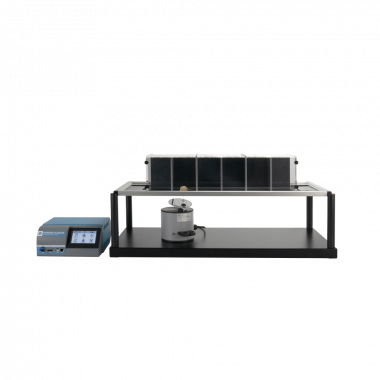
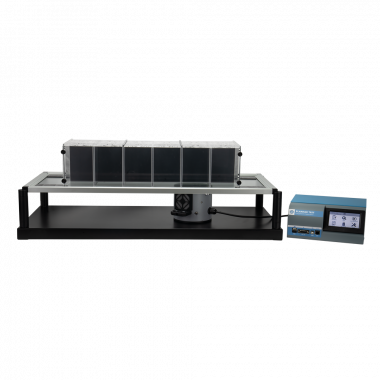
The Plantar Test is used for thermal hyperalgesia studies through radiant heat stimulation of the hind paw and automatic paw-withdrawal detection. It is the gold standard for Thermal Hyperalgesia tests in unrestrained animals. The Tail Flick measures nociceptive thresholds to infrared heat stimulation of the tail and is especially suited to rapid, reflex-based analgesic screening with possibility to run repeated tests thanks to the lack of learning being the tail flick a reflexive response. The Hot/Cold Plate supports hot and cold sensitivity studies, including constant temperature, ramping and complex temperature protocols, while the Thermal Place Preference and Thermal Gradient Ring allow researchers to evaluate thermal preference and avoidance in freely moving animals. Both systems involve a cognitive component and in fact repeated tests on the same animal are subject to hyper- or hypo- responses due to previous test experience.
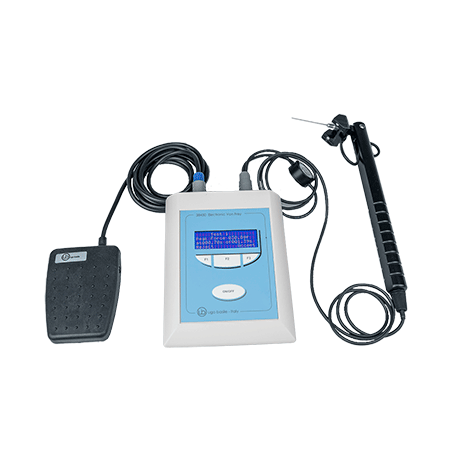
Orofacial Stimulation measures hypersensitivity to thermal (hot and cold) and/or mechanical stimulation of the orofacial area in rats (mouse adaptor available) and is used for research into a wide range of pain conditions involving the trigeminal nerve with no need to cut vibrissae.
Ugo Basile devices for evoked mechanical stimulation
For mechanical sensitivity, the Dynamic Plantar Aesthesiometer provides automated force application and paw-withdrawal scoring for mechanical allodynia studies, while the Electronic Von Frey and Von Frey Filaments support mechanical threshold assessment across different force ranges. The PAM – Pressure Application Measurement system is designed for joint pain and arthritis models, enabling direct quantifiable stimulation of rodent joints. However the PAM can also be used with specific applicators for other parts of the body from the paws to the back and spinal chord, etc. Analgesy-Meter is typically used for inflammatory conditions to measure to measure mechanical sensitivity and pain threshold of pressure applied on mic or rat paw for basic or applied research or phenotyping.
Ugo Basile spontaneous pain apparatus
The Climbing Test adds a vertical activity endpoint for spontaneous pain, motor function and activity-related studies. Librae Incapacitance Tester assesses hind paw weight distribution as an objective measure of spontaneous pain. Plethysmometer measures paw volume and oedema.
Frequently Asked Questions
Rodent pain can be assessed using different instruments depending on the type of pain response being studied. Thermal pain is commonly measured with plantar stimulation systems, tail flick meters, hot/cold plates, thermal place preference systems and thermal gradient paradigms. Mechanical sensitivity is assessed with dynamic plantar aesthesiometers, electronic Von Frey devices, manual Von Frey filaments, paw pressure systems and joint pressure tools. Spontaneous pain and inflammation can be evaluated through weight-bearing asymmetry, paw volume measurement, gait analysis and activity-based readouts.