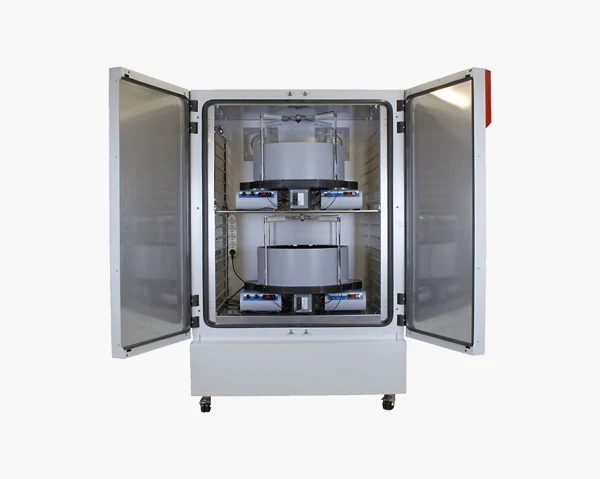


Decoding Endometriosis Associated Pain: How Ugo Basile Instruments Are Supporting the Research

Endometriosis affects an estimated 10% of women of reproductive age worldwide, yet it remains one of the most underdiagnosed and undertreated gynecological conditions in modern medicine. On average, patients wait 7–10 years before receiving a confirmed diagnosis, a delay that reflects not only clinical complexity, but also a persistent gap in our understanding of how endometriosis-related pain manifests and should be measured.
The recent study “Behavioral attenuation of marble burying and digging mirrors evoked and non-evoked phenotypes in the endometriosis mouse model” published in Scientific Reports (Deshpande et al., 2026) takes a meaningful step toward closing that gap, proposing an integrated behavioral assessment framework for the endometriosis mouse model that combines conventional evoked pain tests with a panel of ethologically relevant, non-evoked assays.
Read the complete open access article: https://www.nature.com/articles/s41598-026-40662-9
The Translational Problem with Evoked-Only Pain Testing
Preclinical pain research has long relied on stimulus-based nociceptive assays, applying heat, pressure or mechanical stimuli and measuring the animal's withdrawal response. These tests are well-established, reproducible and informative. But they capture only one dimension of pain: the reflexive response to an applied noxious stimulus.
In chronic pain conditions like endometriosis, the patient experience is far more complex. Women with endometriosis report not just pelvic pain, but fatigue, anxiety, reduced motivation, impaired daily functioning and diminished quality of life. None of these dimensions are captured by a hot plate latency or a Von Frey withdrawal threshold alone.
This is the translational gap the Deshpande et al. study sets out to address.
A Syngeneic Mouse Model and a Multi-Assay Behavioral Framework
Using a validated syngeneic C57BL/6J mouse model (confirmed through H&E histology, elevated M2 macrophage levels in peritoneal fluid and significantly higher serum estrogen) the authors subjected endometriotic (ENDO) mice to a carefully sequenced panel of behavioral tests, moving from least to most invasive across a 12-day experimental window.
The non-evoked assays included: marble burying (MB), spontaneous digging, burrowing (assessed both at 2 hours and overnight), the sucrose splash test for self-grooming, abdominal bout assessment, the open field test (OFT) and the elevated plus maze (EPM).
Learn more on Open Fields test by Ugo Basile.
Learn more on Elevated Plus Maze by Ugo Basile.
The evoked tests included: Dynamic Plantar Aesthesiometer for mechanical hyperalgesia, hot plate for thermal nociception and tail flick (Hargreaves method) for radiant heat sensitivity.
The key finding? ENDO mice showed highly significant reductions in marble burying (p<0.0001) and digging episodes (p<0.0001), alongside diminished burrowing, reduced grooming and increased anxiety-like behavior. Crucially, these non-evoked deficits correlated strongly with one another and with evoked test outcomes, validating their use as complementary endpoints.
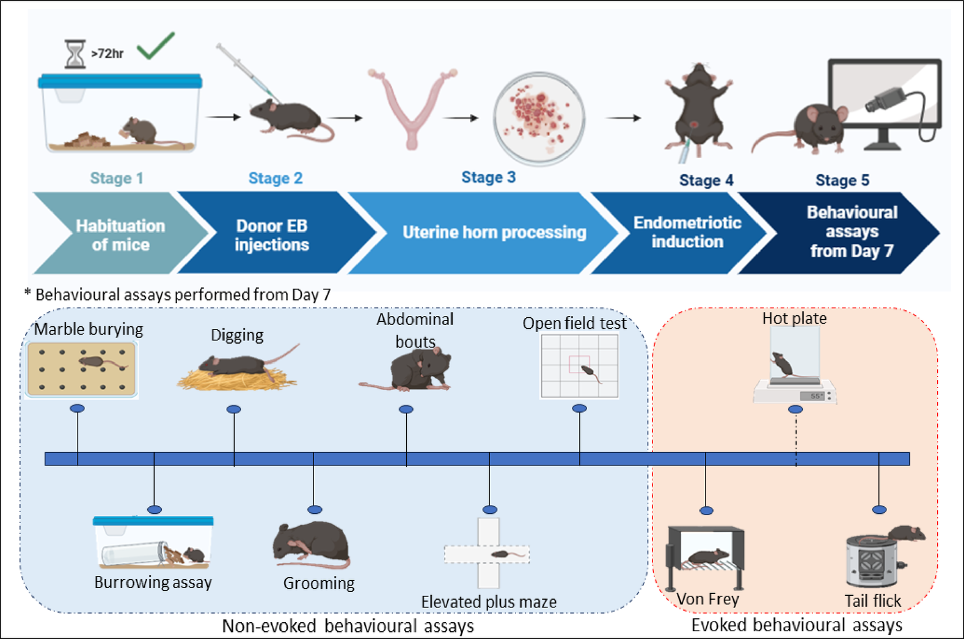
Figure 1 - Experimental timeline for syngeneic ENDO mice model and behavioural assessment.
The Role of Non-Evoked Assays: What They Reveal That Evoked Tests Cannot
Marble burying and digging are species-typical, spontaneous behaviors that reflect an animal's general well-being, motivational state and affective condition. Unlike evoked tests, they do not require direct stimulus application or investigator intervention during the test, which means they are less susceptible to stress-induced confounds and may more accurately represent the chronic, lived experience of pain.
In this study, the strongest positive correlation for marble burying was with anxiety as measured by EPM open arm time (r=0.65), while for digging it was with the overnight burrowing score (r=0.62). Both MB and digging showed moderate negative correlations with abdominal directed licking bouts (r=−0.44 and r=−0.46, respectively), providing a direct behavioral link between reduced motivated activity and visceral pain-like behavior.
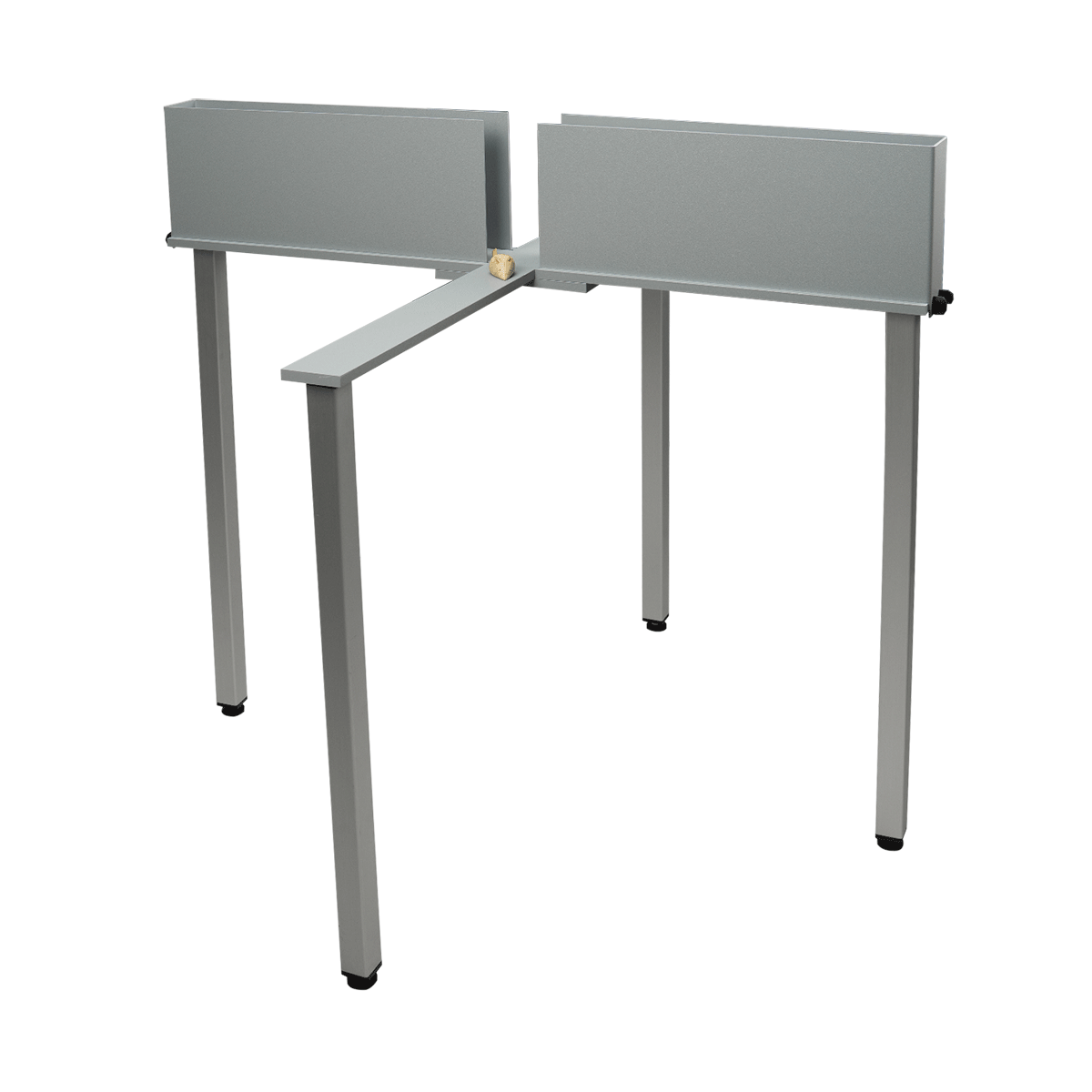
Learn more on Elevated Plus Maze by Ugo Basile.
Importantly, neither marble burying nor digging correlated significantly with lesion number (r=0.19 and r=0.30, respectively). This finding resonates with clinical observations in endometriosis patients, where lesion burden does not reliably predict pain severity, a critical consideration for both research design and therapeutic target selection.
Evoked Tests Confirm Nociception: Ugo Basile Instruments at the Core
While the non-evoked assays characterize the broader behavioral phenotype, the evoked tests in this study confirmed objective nociceptive sensitization in ENDO mice. All three evoked instruments used were from Ugo Basile.
The Dynamic Plantar Aesthesiometer (automated Von Frey) was used to assess mechanical hyperalgesia via calibrated filaments applied to the abdominal surface with linearly increasing force. ENDO mice showed dramatically reduced reaction time (4.93 s vs 26.88 s in controls, p<0.0001) and lower withdrawal force threshold (2.26 g vs 8.92 g, p<0.0001).

Learn more on Dynamic Plantar Aesthesiometer by Ugo Basile.
The Hot/Cold Plate assessed thermal nociception at 55°C. ENDO mice demonstrated significantly shorter latency to respond (7.09 s vs 10.62 s, p<0.0001), confirming thermal hyperalgesia.
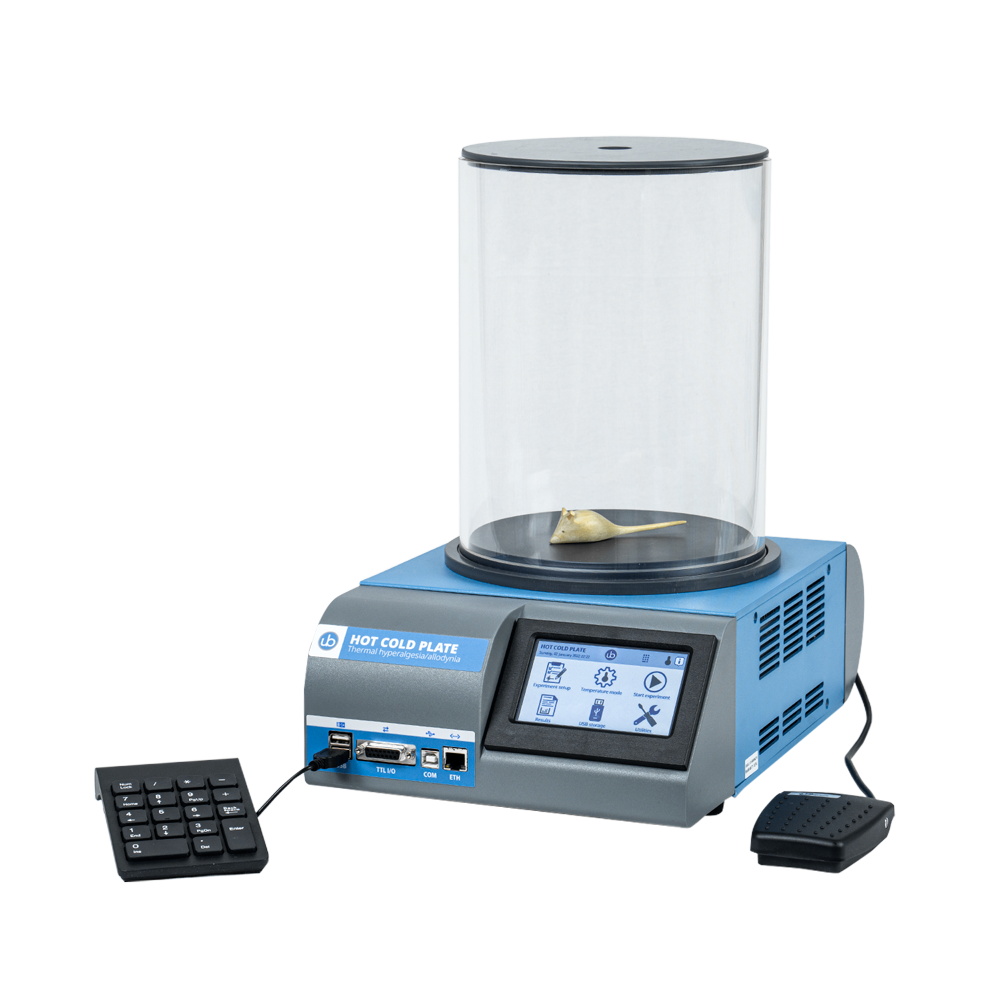
Learn more on Hot/Cold Plate by Ugo Basile.
The I.R. Heat-Flux Radiometer was used for the tail flick test, with infrared intensity set at 30 Hz. ENDO mice showed a marked reduction in tail flick latency (2.34 s vs 7.34 s, p<0.0001).
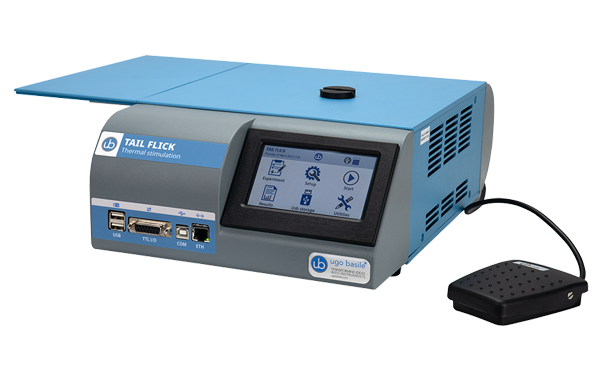
Learn more on Tail Flick by Ugo Basile.
Notably, digging episodes showed the strongest single correlation with any evoked test: r=0.80 with Von Frey reaction time, a remarkably high value that suggests spontaneous digging behavior may serve as a sensitive proxy for mechanical hyperalgesia in this model.
Toward a More Complete Picture of Endometriosis Pain
This study makes a compelling case for integrating non-evoked ethological assays into the standard preclinical toolkit for endometriosis research. Marble burying and digging are not merely supplementary measures, they capture a motivational and affective dimension of chronic pain that evoked tests simply cannot reach. Combined with validated instruments for nociceptive testing, they offer a more complete and translationally relevant characterization of the endometriosis pain phenotype.
For researchers working in reproductive pain, chronic pelvic pain or preclinical behavioral pharmacology, this framework, and the instruments that support it, represents a meaningful step toward endpoints that better reflect the patient experience.
Deshpande S. et al. "Behavioral attenuation of marble burying and digging mirrors evoked and non-evoked phenotypes in the endometriosis mouse model." Scientific Reports 16, 10007 (2026). https://doi.org/10.1038/s41598-026-40662-9
Interested in integrating non-evoked behavioral assays into your research workflow?
Ugo Basile offers a comprehensive range of instruments designed to support both evoked and non-evoked pain assessment in preclinical models.
Contact us to find out how we can support your research: [email protected]